College Football Week 13 Awards November 25, 2012
Posted by intellectualgridiron in Sports.Tags: Air Force, Alabama, Arizona, Arizona State, Auburn, B1G, BCS, Big 10, Big Ten, Bill Snyder, Boise State, Brian Kelly, Buckeyes, Charlie Strong, Cincinnati, Clemson, college, Columbus, Commodores, Connecticut, crasher, Dana Holgorsen, Dores, Eastern Michigan, Fighting, Florida, Florida State, football, Fresno State, FSU, Gamecocks, Gators, Georgia, Georgia Tech, Hawaii, Iowa, Irish, Jay Cutler, Jimbo Fisher, Joker Phillips, Kansas, Kansas State, Kent State, Kentucky, Kyle Flood, Lane Kiffin, Liberty Bowl, Los Angeles, Louisville, MAC, Mack Brown, Madison, Michigan, Mississippi State, NCAA, Nebraska, Nevada, Nicholls, Noles, Northern Illinois, Notre Dame, Ohio State, Oklahoma, Oklahoma State, Ole Miss, Oregon State, Penn State, Pete Carroll, Pittsburgh, rival, Ron English, Rutgers, Seminoles, South Alabama, South Bend, South Carolina, South Florida, Stanford, Tallahassee, TCU, Tennessee, Texas, Tigers, Todd Graham, Trojan, UConn, Urban Meyer, USC, Vanderbilt, Vandy, Washington, Washington State, West Virginia, Will Muschamp, Wisconsin
add a comment
(Note: All rankings are current AP [post-week 13, pre-week 14] unless otherwise noted.)
COACHES
Wish I were him: Will Muschamp, Florida
Glad I’m not him: Mack Brown, Texas
Glad it’s finally over: Joker Phillips, Kentucky
Lucky guy: Todd Graham, Arizona State
Poor guy: Charlie Strong, Louisville
Desperately seeking a clue: Dana Holgorsen, West Virginia
Desperately seeking a P.R. man: Urban Meyer, Ohio State
Desperately seeking sunglasses and a fake beard: Kyle Flood, Rutgers
Desperately seeking … anything: Ron English, Eastern Michigan
TEAMS
Thought you’d kick butt, you did: Alabama (beat Auburn 49-0)
Thought you’d kick butt, you didn’t: Nebraska (beat Iowa 13-7)
Thought you’d get your butt kicked, you did: Georgia Tech (lost to No. 3 Georgia 42-10)
Thought you’d get your butt kicked, you didn’t: Washington State (beat Washington 31-28, OT)
Thought you wouldn’t kick butt, you did: Ole Miss (beat Mississippi State 41-24)
Dang, they’re good: Stanford
Dang, they’re bad: South Florida
Can’t Stand Prosperity: Arizona (lost to Arizona State 41-34)
Did the season start? Texas
Can the season end? Kansas
Can the season never end? Florida
GAMES
Play this again: No. 12* South Carolina 27, No. 11* Clemson 17 (notwithstanding Baylor 52, Texas Tech 45, OT)
Never play this again: Fresno State 48, Air Force 15
What? TCU 20, No. 15* Texas 13
Huh? UConn 23, No. 20* Louisville 20, 3OT
Are you kidding me? Pittsburgh 27, No. 18* Rutgers 6
Oh – my – God: Ole Miss 41, Mississippi State 24
Told you so: No. 13* Oklahoma 51, No. 21* Oklahoma State 48, OT
*Week 13 AP rankings
NEXT WEEK
Ticket to die for: No. 2 Alabama vs. No .3 Georgia in Atlanta
Best non-Big Six vs. Big Six matchup: (none)
Best non-Big Six matchup: No. 19 Northern Illinois @ No. 18 Kent State (MAC Championship, Friday night)
Upset alert: No. 7 Kansas State @ No. 23 Texas
Must win: Alabama vs. Georgia in the SEC Championship game (notwithstanding Louisville @ Rutgers)
Offensive explosion: Baylor @ Oklahoma State
Defensive struggle: Cincinnati @ UConn
Great game no one is talking about: Louisville @ Rutgers, Thursday
Intriguing coaching matchup: Mack Brown of Texas vs. Bill Snyder of Kansas State
Who’s bringing the body bags? Nicholls @ No. 16 Oregon State
Why are they playing? South Alabama @ Hawaii
Plenty of good seats remaining: New Mexico State @ Texas State
They shoot horses, don’t they? Kansas @ West Virginia
Rivalry Week in Review:
Give Urban Meyer a ton of credit: Ohio State had nothing to play for this year. Nothing. No matter how well they played this regular season, they were ineligible for any sort of bowl game or any other post-season play, not even the Big 10 Conference championship game. That is too bad, because they currently, er, lead the Leaders division of the conference by a virtual mile (two games, to be exact). Moreover, the team they lead is Penn State, who is ineligible for a much longer stretch of time, sadly, and for even more bizarre reasons. The Buckeyes’ current lead in the conference is three games ahead of the actual eligible member of the Leaders division, that being Wisconsin, whom Ohio State defeated in Madison, Wis., in overtime. As stated earlier, the Buckeyes had nothing to play for this year, and as such could have just lied down and given up early on. Yet Coach Meyer has kept his team focused and hungry every week. Best of all, they capped off an undefeated season by beating arch-rival Michigan 26-21. If these shadows remain unchanged, then the future in Columbus, Ohio is very bright indeed.
Yes, Florida won: But give Jimbo Fisher a ton of credit. He has brought Florida State back to near-football factory status, which has, in turn, brought the Sunshine State Rivalry back to prominence, which is good for football. The Seminoles put up on heckuva fight against the Gators in Tallahassee, but in the end, the latter’s defense proved too much for the former, as Florida triumphed in the end, 37-26. Yet to put things in perspective, this “rivalry” had been rather one-sided since 2004, be it in recent wins on the part of the ‘Noles (31-7 in 2010, 21-7 in 2011), or in consecutive wins (the Gators won all matchups with FSU from 2004 to 2009). The level of play, the overall excitement, and reasonably close score indicate that the one-sidedness has come to an end, at least temporarily. Expect this rivalry to retain its regained intensity in the future years to come!
Speaking of Florida, it looks like Muschamp is “the guy” after all. Folks had left him for dead at the end of last year after he went only 7-6 in his first season as head coach of the Gators. Yet this year, he has lost only one game, has just defeated his No. 10-ranked, in-state rival, and his team is currently ranked No. 4 in the nation. The Gators look to be in good hands after all.
Is the USC-Notre Dame rivalry back? Could be. Brian Kelly has put enough pieces together at Notre Dame to make the team recall the physical squads that made the Irish top contenders for years on end. Meanwhile, Lane Kiffin has gradually been putting pieces back together at USC after years of probation. Notre Dame was downright dormant as a former national power for a decade and a half. Meanwhile, USC was severely weakened by scholarship reductions due to probation, which they have now survived, and are looking to get back to where they were under Pete Carroll’s tenure. Going in to the most recent game, this rivalry, like the previous one mentioned, was also one-sided over the past decade. The Trojans won all but one of these games since 2002, and embarrassed the Irish in South Bend last year, 31-17. This year, Notre Dame stepped up and won in Los Angeles, 22-13, against a Trojan team with a back-up redshirt freshman and a team that has yet to find itself in terms of a necessary level of discipline and consistency. Regardless, though, the game was competitive, and we look forward to more of it in the coming years.
Speaking of one-sided rivalries: The South Carolina-Clemson game is one that has overall been in the latter’s favor, as the Tigers led the rivalry 65-41-4. Nevertheless, with the Gamecocks’ recent win, they have now won the last four games between them and the Tigers. This is the first time South Carolina has repeated this streak since from 1951-1954, and it ties the record for their longest win streak against their upstate rival. Moreover, South Carolina has won five out of the last seven of such games.
Is it too early to say that this is the greatest Vanderbilt team of modern times, if not of all time? Don’t laugh. When is the last time you saw the Commodores go 8-4? In recent memory, Vandy teams showed some signs of brilliance (the Jay Cutler-led squads, for example), but even they struggled to win six games, most of the time falling short of that mark. This team not only surpassed that mark for bowl eligibility, it blew passed it completely. Along the way, they blew out Kentucky, Tennessee, and Wake Forest. Not the most impressive opponents, to be sure, but the fact that they were able to hold off a rapidly-improving Ole Miss should count for something. To be sure, they have proven not to be able to handle the true heavyweights of the conference, losing badly to both Georgia (48-3) and Florida (31-17), and lost the season opener at home to South Carolina (17-13). Still, despite these weaknesses, the ‘Dores are bowl eligible for the second season in a row, something unprecedented in the history of the program. If that is not enough, the team reached other key milestones as well. The evidence speaks for itself. That said, if any doubts remain, last year, Vandy went only 6-6 before losing to Cincinnati in the Liberty Bowl. This year, they are a stronger team, and are 8-4; a bowl win should quell any doubt that they are the greatest Commodore squad of modern times, if not since the program’s inception in 1890.
Here’s something to blow you mind: Iowa and Kentucky, both cellar-dwellers in their respective conference divisions, are the only reasons why there is not some undefeated MAC team out there threatening to crash the BCS. Check it out. Iowa beat Northern Illinois by one point in the season opener, and Kentucky beat Kent State 47-14 in week 2. Want to make things even more interesting? Ask yourself the following question: would either of these “Big Six” teams beat any one of those two MAC teams at this stage of the season?
Oh yeah, and Notre Dame will be playing for the national championship for the first time in 24 years. Yay.
Cleve Duncan, R.I.P.: “Earth Angel” shall forever live on. November 22, 2012
Posted by intellectualgridiron in Pop Culture.Tags: 1954, 1955, Back to the Future, Cleve Duncan, doo-wop, Dootone, Earth Angel, Hey Senorita, Kool, Oldie, Oldies
add a comment
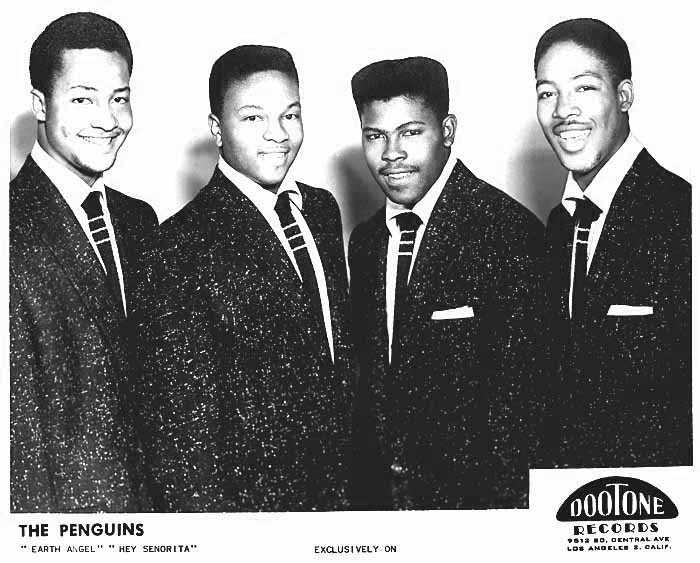
Cleve Duncan, second from the left, was the lead tenor on the Penguins when they recorded “Earth Angel” In 1954, a hit for the ages.
Cleve Duncan, the tenor vocalist who sang the lyrics to the immortal doo-wop hit “Earth Angel” by the Penguins, died earlier this month at age 78. Their huge hit, which to this day has sold 10 Million copies, was recorded in June of 1954 (released later un September of that year) and peaked at No. 1 on the R&B charts at the beginning of 1955. Do the math, and that means that Duncan was only 20 years old when he sang/recorded one for the ages. The New York Times has an excellent obituary/tribute piece on Duncan. Anybody familiar with the well-known film “Back to the Future” would be apt to recall that the band playing at the high school dance sang that song during one of the pivotal scenes of the movie, demonstrating the song’s incredible popularity the year most of the picture took place (1955) as well as the previous year.

A recent copy of the 1954/1955 hit “Earth Angel.” The look of the independent, black-owned label did not change in over 30 years. The label’s original address was 9514 S. Central Avenue in Los Angeles. (from author’s collection)
The song itself is a reminder that it does not necessarily take a gigantic production with sophisticated equipment to have a huge hit. The only instrumentation was a piano, a stand-up, acoustic bass, and drums. Some of the drums covered with pillows so that when struck, their sound would not overwhelm the vocalists. To top it all off, the song was recorded in a garage (!). More interesting history of the song and of others can be found on this great site.
The strength of the record is the sincerity of Duncan’s singing. That sincerity is what touched the nerve of the buying public 58 years ago, and has continued to do so for generations since. The irony is that it was initially the “B” side of the single, with “Hey Senorita,” the “A” side (not a bad recording in and of itself). But DJ’s soon flipped the record over and treated “Earth Angel” as the “A” side.
In a little bit of doo-wop/Oldies trivia, the Penguins started off as four students from Fremont High School in Los Angeles, and when they formed as a group, they first called themselves the Flywheels. But they re-named their group the Penguins after the mascot on a pack of Kool cigarettes, demonstrating, if nothing else, that certain stereotypes are indeed based on truths.
But that aside, Duncan himself thought that the song would have long-term staying power in our national memory. “I never get tired of singing it,” he said, “as long as people never get tired of hearing it.”
Addendum, 12-01-12:
Given that it is now the Christmas season, it is more than behooving to mention that the Penguins, Duncan included, recorded a fantastic d0o-wop Christmas record on the Mercury label in 1955. Enjoy!
Teams that could beat Notre Dame November 22, 2012
Posted by intellectualgridiron in Sports.Tags: 2012, A&M, Aaron Murray, Aggies, Alabama, Bama, Bayou Bengals, BCS, Bowl, Brian Kelly, Buckeye, Bulldogs, Capital One, Cardinal, college, Cotton, Crimson Tide, defense, Fighting, Florida, football, Gamecocks, Gators, Georgia, Glendale, Independence, Iowa, Irish, Jadeveon Clowney, Jeff Driskel, Johnny Manziel, Kevin Sumlin, LSU, miracle, Mississippi State, NCAA, ND, Nick Saban, Notre Dame, offense, Ohio State, Our Lady, Pasadena, Penn State, Purdue, SEC, South Bend, South Carolina, Stanford, Steve Spurrier, Sugar, Tennessee, Texas, Tigers, UAB, Urban Meyer, Wisconsin
add a comment
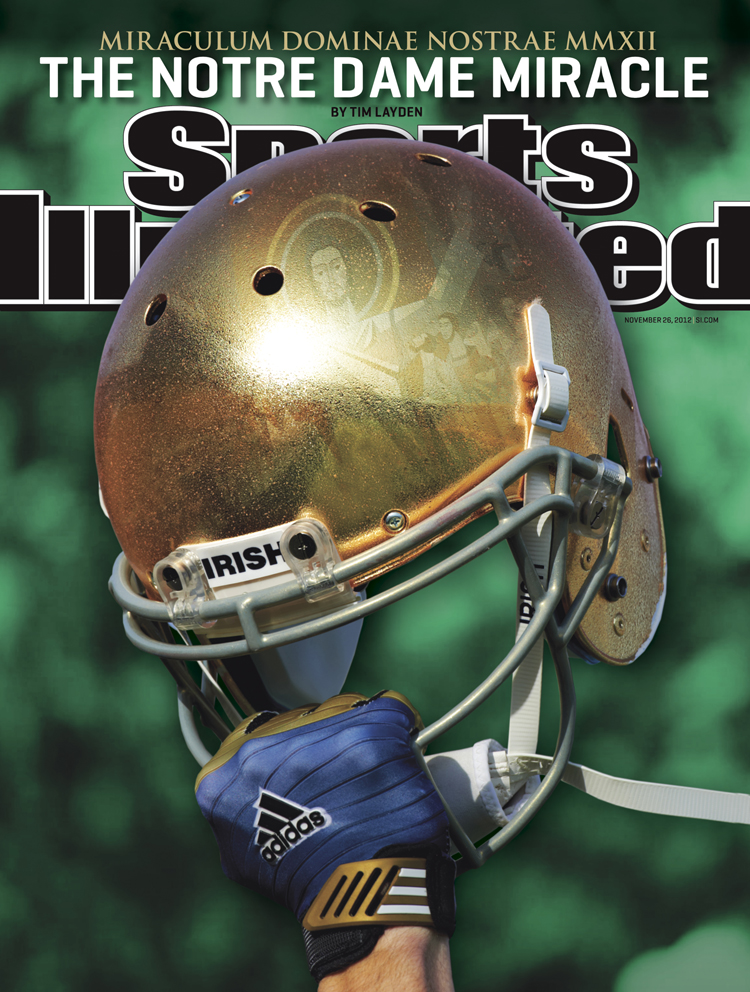
From the latest edition of Sports Illustrated. The Latin phrase at the top translates to “The Miracle of Our Lady 2012”
In case some dear readers have been hanging out in a cave for an extended period of time, Notre Dame is now the no. 1 college football team in the nation for the first time in 19 years to the month. Given the national following the Fighting Irish have, there has been more than a bit of hoopla over this development. Without going into obscene details, I can see Regis Philbin and other ND-loving celebrities losing control of themselves right about now. But just because the Irish are no. 1 by default, does not mean they are invincible? Of course not. Yes, they are undefeated; yes, they have beaten some decent teams. To be fair, Notre Dame is formidable. Brian Kelly has done an incredible job of bringing in a talented receiving corps for the offense while massively upgrading the team’s talent defensively. Their front five and front seven are both sufficiently physical to compete with anybody. But there are teams out there that would give ND fits, if not ruin their season outright if the two played each other. I therefore submit this list of teams to a candid world:
Practically sure things:
LSU: Without a doubt, LSU would give Notre Dame all it would want and then some. Over the past decade, there is no team that has been known to show up in big games and win them like LSU. Yes, they lost at home to Alabama this year. Yes, they lost the national championship game to Alabama at the end of last season. Yet ought these not to be a strong commentary on the Crimson Tide’s prowess rather then to the Bayou Bengals’ detriment? The Tigers have won two national titles within a decade. Aside from the BCS game this past season, they have won almost all of their bowl games*. Stretch the scale of time back to 15 years, and every time the Irish have played the Tigers in a bowl game (the 1997 Independence Bowl, the 2006-’07 Sugar Bowl), LSU has won both games handily. The odds, talent, and the mindset are all in LSU’s favor. Notre Dame ought to pray that the two teams do not meet anytime soon.
*LSU’s only bowl losses were to a tough Texas team in the 2003 Cotton Bowl, and inexplicable losses in the Capital One Bowl to both Iowa (30-20 on Jan. 1, 2005), and Penn State (19-17 on Jan. 1, 2010).
Stanford: Don’t laugh. Yes, they already lost to Notre Dame this year, but by that same token, let us put things into perspective. A), the game was in South Bend, B) the weather was horrible, C) what did the Cardinal in was two consecutive horrible play calls on the goal line in overtime. Now imagine the two teams playing each other again, this time on a neutral field, and reasonable weather. Stanford has the personnel to fight the Irish effectively on the line on both sides of the ball. They sport a very physical front seven, and their offense is ground-and-pound. This approach was two horribly-called plays shy of working under very adverse circumstances on the road. Imagine how well it would work in, say, Glendale, Ariz., or Pasadena.
Texas A&M: The Aggies have proven that they can move the ball on tough defenses. Quarterback Johnny Manziel has gotten better and better as the season has progressed. They moved the ball effectively on Alabama, after all. Moreover, Coach Kevin Sumlin has proven to be an excellent motivator in getting his men ready for big games. Some of their margins of victory are impressive. For example, they beat a respected Mississippi State squad 38-13, and then turned around the following week and beat then-no. 1 Alabama. What this tells me is that you can count on consistent play from A&M at this stage of the season. That, plus quick defense and superior quarterback play add up to being too much for the Irish to handle.
Ohio State: Yes, Brian Kelly has proven to be one of the best coaches in the college game. But so has Urban Meyer, and his resume of winning big games with more teams, one could argue, trumps Kelly’s. Never count out Meyer in big games. Moreover, once he brings in more of his own style of players, they will execute his spread offense all the more effectively. True, the Buckeyes were playing some teams too closely for comfort earlier in the year. After all, they only scored 29 points on abysmal UAB, of all teams! But lately the offense runs like a well-oiled machine. During their last games, they have averaged scoring 49 points each. Their lower scores during that span were 29 points (where Purdue’s defense actually showed up) and 21 points against Wisconsin’s traditionally stout ‘D.’ Notre Dame has not encountered anything like Ohio State’s offense throughout this memorable season of theirs.
Questionable teams:
Florida: Yes, their defense is practically impregnable. Good luck moving the ball on the Gators. The problem is on the offensive side of the ball. Jeff Driskel is a mediocre quarterback at best, and Notre Dame’s defense will not play dead simply because they are facing such a vaunted program. The game would be very low-scoring, with the outcome depending on how well Driskell executes, which is a crap-shoot.
South Carolina: On paper, this team should be a very formidable foe for the Irish. A strong running game, one of the best QB’s in college football in Connor Shaw, and defense with potential NFL talent, anchored by Jadeveon Clowney. The problem lies in consistency. The Gamecocks blew out a tough Georgia team earlier in the year, only to embarrass themselves at Florida a few weeks later. After that, they played an awful Tennessee much more closely than the game should have been, again, on paper (they won that game only 38-35). The Ol’ Ball Coach triumphing over the hot-headed Irish Coach will depend on the team that gave Georgia its only loss of the year to show up.
Georgia: The Bulldogs have an incredibly talented offense led by experienced, highly-rated quarterback Aaron Murray. On paper, the offense would give Notre Dame’s talented defense all they could handle. Defensively, Georgia sports a typical talented, ultra-quick SEC defense. The problem, like that of South Carolina, is consistency. Yes, they could theoretically take Notre Dame, but it all comes down to which team shows up against them: the team that beat Florida handily on an ostensibly neutral field, or the team that lost badly earlier on to South Carolina?
Alabama: Easily the least-questionable team within this category. The only reason they are in said category as opposed to the above one is that Texas A&M exposed a chink or two in their impressive armor. Their defense is talented, but young, and their offense is not the most imaginative of teams at their level. But let us say that the two – Bama and ND – end up playing each other in the BCS national championship game. Give Nick Saban a month to prepare – a luxury no team has had thus far, to be sure – and he is practically unstoppable. Advantage, Crimson Tide.
If any dear readers think other teams merit being added to the list, I would be more than happy to entertain suggestions! (P.S.: Happy Thanksgiving to one and all!)
Memo to Big Ten: More is not always better November 21, 2012
Posted by intellectualgridiron in Sports.Tags: ACC, Atlantic Coast Confernce, B1G, Badgers, Big 10, Big East, Big Ten, Blazers, Buckeyes, Buffaloes, Cal Poly, college, Colorado, Cornhuskers, D.C., Dan Wetzel, demographics, football, Hawkeyes, Iowa, Iowa City, Jim Delany, Madison, Maryland, Michigan State, Missouri, Nate Silver, NCAA, Nebraska, New Jersey, New York, North Carolina, Northwestern, Notre Dame, Ohio State, Pac-12, Rutgers, Scarlet Knights, SEC, Spartans, Terps, Terrapins, Texas, Texas A&M, UAB, Utah, Utes, Virginia, Washington, Wisconsin, Youngstown State
add a comment
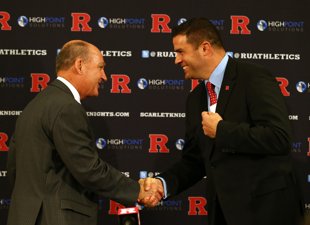 More is not necessary better. If one of your favorite products introduces a new product line, will that help the overall brand, or will it detract from productive capacity and quality control resources for the product and you and others already know and love? If your favorite airline adds more routes, instead of enhancing the brand, all it might do is cause more flights to be delayed.
The reason I bring this up is because the news has come out that the Big Ten is inviting both Maryland and Rutgers into their prestigious conference. The invitation obviously benefits these two universities, but how does it benefit the Big Ten? More is not always “more,” as in better. It’s not as if the Big Ten is adding Notre Dame and Texas, in which there would be more great TV games and home games.
The benefits for Maryland and Rutgers are obvious. Neither teams are making much money with their athletics programs (least of all Rutgers), not with the relatively lousy television deals they currently have. By joining the Big 10, that problem instantly vanishes, since that conference has one of the best TV deals in the business. It is not rocket science to figure out why a poor guy wants to marry into a rich family.
Moreover, while those two teams’ conference fit is a geographic stretch, academically it somewhat makes sense. Like almost all other conference members, Maryland and Rutgers are both members of the Association of American Universities, for what that is worth (oddly enough, Nebraska is the only B1G member not yet in that affiliation). Adding these two schools could further enhance the conference’s already solid academic reputation.
But aside from that, how does the Big Ten benefit? From a fan’s perspective alone, this could border on havoc. Think of the traveling distance. Many Big Ten fans travel by the busload to some away games. A band of Nebraska fans traveling to Piscataway, N.J. to see their beloved Cornhuskers play Rutgers would literally be journeying halfway across the country. That’s a huge difference from a more typical conference matchup in which some Wisconsin fans would have but a [roughly] three-hour run to Iowa City to cheer on their Badgers against the Hawkeyes.
Moreover, think of home game schedules for a moment. So few great home games are available year in and year out. Think about how many season ticket-holding fans have to put up with lousy match-ups at home. Wisconsin playing Cal Poly or Ohio State playing Youngstown State at home might be easy wins, but they are horrible games for the fans. Ditto with the Buckeyes playing the Blazers of UAB; yuck! Fans of B1G teams wait patiently from great match-ups, such as the Buckeyes coming in to Camp Randall Stadium in Madison for a night game, or Michigan State coming into Northwestern for a close, hard-fought match-up.
With Rutgers and Maryland now in the mix, those great regional rivalries that fans hunger for are now further in jeopardy in place of a potentially mediocre match-up with these mediocre teams. Again, what has the Big Ten, on balance, to gain from this? The Terrapins’ affiliation with the conference will not make the program improve.
It also messes with traditional rivalries. The Terps have nothing to do with the Spartans, Buckeyes or Badgers. Their rivals are Virginia, North Carolina, etc., all in the Atlantic Coast Conference. Leaving the ACC for the B1G means all those rivalries instantly vanish.
Ah, but adding Rutgers and Maryland into the conference means that the Big 10 can tap into the New York City and Washington, D.C. markets, say the expansion advocates. But people in those markets don’t care about either team, so says Nate Silver, who has a great piece that voices that same concerns written on this page. Silver’s analysis shows that there are low percentages of college football fans in those two large metro areas. Why compromise teams’ schedules for such a diminishing return?
The bottom line is that the Big Ten, arguably most prestigious athletic conference overall in college athletics (notwithstanding football alone, in which the SEC is, at this time, head and shoulders above everyone else), is running a serious risk of diluting their brand.
If you want further proof of this real possibility of brand dilution, look no further than the Pac-12 to see how this move makes no sense. Any benefit of adding Utah and Colorado is marginal at best. The Utes have been mediocre this year, and the Buffaloes have been an outright embarrassment, as they are arguably the worst team in the FBS (see: “Dang, they’re bad,” see: “Can the season end?”). Yes, the Pac-12 has some great teams right now: six of its member teams are, as of his week, ranked in the top 25. But Utah is not among those who are ranked, and, as already mentioned, Colorado is embarrassingly abysmal.
At least when the SEC expanded, it brought in Missouri and Texas A&M; two quality programs. Maryland and Rutgers just dilute the brand, and further weaken an already teetering Big East. Big Ten Commissioner Jim Delany may think that bringing these two teams in will allow for it to reach certain key “demographics,” but not only does Nate Silver show that those demos are not as inviting as they would initially appear, Dan Wetzel of Rivals/Yahoo! points out similar problems. Delany and the rest of the conference leadership need to snap out of this trance before they make a horrible mistake that will ruin the brand.
College Football Week 12 Awards November 18, 2012
Posted by intellectualgridiron in Sports.Tags: Akron, Alabama, AP, Army, Art Briles, Atlanta, Baylor, BCS, Bears, Bill Snyder, Bulldogs, BYU, California, championship, CHip Kelly, Clemson, Collin Klein, Crimson Tide, Dabo Swinney, David Shaw, Derek Dooley, Ducks, Eastern Michigan, Eugene, Florida, Florida State, football, Georgia, Georgia Tech, Hawaii, Jeff Tedford, Johnny Manziel, Joker Phillips, K-State, Kansas State, Kent State, Kentucky, Lane Kiffin, Longhorns, Los Angeles, LSU, Mark Dantonio, Miami, Michigan, Michigan State, Mike Riley, national, national championship, NCAA, New Mexico State, No. 1, No. 2, No. 3, Northern Illinois, Notre Dame, Ohio, Ohio State, Ohio U, Oklahoma, Oklahoma State, Ole Miss, Oregon, Oregon State, OT, poll, SEC, South Carolina, Stanford, TCU, Temple, Tennessee, Texas, Texas A&M, Texas Tech, Toledo, Tommy Tuberville, UAB, UCLA, UNLV, USA Today, USC, Vols, Volunteers, Waco, Wake Forest, Western Carolina, Wildcats, Wofford
add a comment
(Note: All rankings are current AP [post-week 12, pre-week 13] unless otherwise noted.)
COACHES
Wish I were him: Art Briles, Baylor
Glad I’m not him: Bill Snyder, Kansas State
Lucky guy: David Shaw, Stanford
Poor guy: Mark Dantonio, Michigan State
Desperately seeking a clue: Jeff Tedford, California
Desperately seeking a P.R. man: Dabo Swinney, Clemson
Desperately seeking sunglasses and a fake beard: Tommy Tuberville, Texas Tech
Desperately seeking … anything: Derek Dooley, Tennessee
TEAMS
Thought you’d kick butt, you did: Alabama (beat Western Carolina 49-0)
Thought you’d kick butt, you didn’t: Kansas State (see below)
Thought you’d get your butt kicked, you did: Wake Forest (lost to Notre Dame 38-0)
Thought you’d get your butt kicked, you didn’t: Wofford (lost to No. 13 South Carolina 24-7)
Thought you wouldn’t kick butt, you did: Baylor (see below)
Thought you wouldn’t get your butt kicked, you did: Army (see below)
Dang, they’re good: Georgia
Dang, they’re bad: UAB
Can’t Stand Prosperity: Kansas State (see below)
Did the season start? Michigan State
Can the season end? Tennessee
Can the season never end? LSU
GAMES
Play this again: No. 8 LSU 41, Ole Miss 35
Never play this again: Temple 63, Army 32
What? Utah State 48, No. 20* Louisiana Tech 41, OT
Huh? No. 23* Oklahoma State 59, No. 24* Texas Tech 21
Are you kidding me? No. 13* Stanford 17, No. 2* Oregon 14, OT
Oh – my – God: Baylor 52, No. 1* Kansas State 24
* Week 12 AP rankings
NEXT WEEK
Ticket to die for: No. 6 Florida @ No. 10 Florida State (notwithstanding No. 13 South Carolina @ No. 12 Clemson)
Best non-Big Six vs. Big Six matchup: (none)
Best non-Big Six matchup: Ohio U @ Kent State
Upset alert: Baylor over Texas Tech in Waco
Must win: No. 1 Notre Dame @ USC
Offensive explosion: No. 24 Oklahoma State @ No. 12 Oklahoma
Defensive struggle: No. 20 Michigan @ No. 4 Ohio State
Great game no one is talking about: No. 5 Oregon @ No. 16 Oregon State
Thanksgiving Day Special: TCU @ No. 18 Texas
Cloud Nine Bowl: No. 8 Stanford @ No. 17 UCLA
Intriguing coaching matchup: Mike Riley of Oregon State vs. Chip Kelly of Oregon
Who’s bringing the body bags? Georgia Tech @ No. 3 Georgia (notwithstanding Northern Illinois @ Eastern Michigan, Friday)
Why are they playing? BYU @ New Mexico State
Plenty of good seats remaining: UNLV @ Hawaii
Plenty of good seats remaining, SEC East edition: Kentucky @ Tennessee
They shoot horses, don’t they? Akron @ Toledo (Tuesday night)
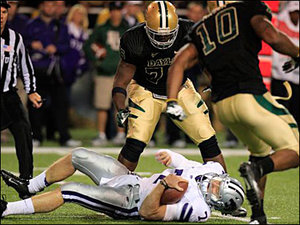 Instant BCS Chaos: In just one night, the BCS standings have turned upside down. All Kansas State and Oregon had to do was win out, and they would have been matched up in a very intriguing national championship game in Miami. Scratch that; ain’t gonna happen. Oregon lost a close, hard-fought game in Eugene, Ore., to a tough Stanford squad. The game went into OT, and the Duck’s failure to score on their opening possession gave the Cardinal an opportunity to win the game with a field goal, which they did. Another one bites the dust.
Yet half-way across the country in the heart of Texas (Waco, to be exact), something even more improbable developed. Kansas State, at that time ranked No. 1 in the land, went down to spectacular defeat at the hands of Art Briles’ Baylor [Baptist] Bears. The score itself was improbable: when is the last time any top-ranked team went down to an un-ranked team by a score of 52-24? Nothing accounts for that. Credit Briles and Co. with coming up with an amazing game plan that effectively attacked the Wildcats where it hurt them the most, and they never let up the entire night.
Not in five years has there been such BCS standings chaos in one night of regular season football. Yet things get even more intriguing from this point onward. For the first time in 19 years, almost to the week, Notre Dame is the No. 1 team in the nation. No doubt plenty of rejoicing erupted in South Bend., Ind., instantly upon Kansas State’s defeat, and no doubt the merriment doubled again in light of Oregon going down at home in OT. After winning close game after close game, Brian Kelly has brought the Fighting Irish back to national prominence and is in the driver’s seat to punch their ticket to Miami come early January. Meanwhile, an entire nation will scrutinize Notre Dame to see if they themselves can stand prosperity as they journey to Los Angeles this upcoming weekend to take on traditional rival USC.
And just like that, the SEC is back in the national discussion: Alabama’s upset at home to Texas A&M last week seemed to wipe out the Crimson Tide’s hopes of repeating as national title contenders. With last night’s, er, developments, despair has instantly transformed into renewed hope and ambition. Bama is now second in both the AP and USA Today Polls, and Georgia is no. 3. Should both those teams win out – extra emphasis on ‘should’ – it will be a very interesting contest in Atlanta for the SEC championship come Dec. 1.
Dooley Fired: Not only is now-former Tennessee head coach Derek Dooley “Desperately seeking…anything.” Now he’ll be desperately seeking…a job. The University of Tennessee decided to cut its ties with Dooley after their embarrassing loss in Nashville to up-and-coming, in-state rival Vanderbilt, 41-18. The firing is effective immediately, as it has been reported on Tennessee’s athletics website that offensive coordinator Jim Chaney (with whom I worked while a student manager at Purdue, as he was an assistant under Coach Joe Tiller) will be the interim head coach for the upcoming game against Kentucky. Evidently, the powers that be are not giving Dooley a couple of curtain calls like those UK’s Joker Phillips has received.
Yesterday’s embarrassing loss to the Commodores was just the last straw in one bad development after another for the program; the final blow to prove to the Volunteer nation that things need to be guided in a newer, better direction. This year alone, the Vols have gone 4-7, and 0-7 in the SEC, something entirely unacceptable to a large, proud fan base, to say nothing of a program with such massive tradition and resources behind it. In just one game shy of three complete seasons, Dooley is just 15-21 with Tennessee, but worse yet, 4-19 in the SEC, and 0-15 against top-25 opponents. Let us not forget that his hiring was essentially a stop-gap move in the wake of Lane Kiffin’s sudden departure for the USC job. Let us also not forget that under Dooley’s leadership last year, Tennessee lost their annual season-closer to Kentucky for the first time since 1984, and it is not a given that the Vols will Triumph over the Wildcats this year, either. Come to think of it, has Kentucky ever defeated Tennessee in football for two seasons in a row?
Paging Bobby Petrino…
Heisman talk: Quarterback Collin Klein of K-State was the Heisman frontrunner, but after his team lost ignominiously, and his performance was mediocre at best (27 for 50, 286 yards, 2 td’s but 3 int’s), could it be that “Johnny Football,” Johnny Manziel, himself of Texas A&M, is the new award frontrunner? Food for thought, in any case.
Kansas State: Shades of 1998 November 18, 2012
Posted by intellectualgridiron in Sports.Tags: 1998, Alabama, Alamo Bowl, AP Poll, Austin, B1G, BCS, Big 12, Big Ten, Big XII, Bill Snyder, Boilermakers, Boilers, Bowl, bowl game, championship, Chicago, Chris Daniels, Cincinnati, Cleveland, Coaches Poll, Columbus, Dallas, Drew Brees, Fiesta Bowl, football, Houston, Jayhawks, K-State, Kansas, Kansas City, Kansas State, Manhattan, Marriott, Missouri, national championship, NCAA, Nebraska, New York, Notre Dame, Ohio State, Orange, Pittsburgh, Purdue, Rose, San Antonio, Sugar, Texas, Texas A&M, Tigers, West Virginia, Wildcats
add a comment
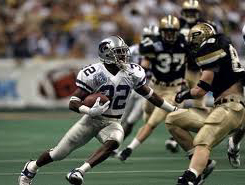 We’ve seen this before. This is not the first time that Kansas State’s national championship run was ruined late in the season. The Wildcats made a similar run in 1998, defeating powerful Nebraska for the first time in 30 years, among other things. But come the Big XII championship game of that year, K-State overlooked a hungry Texas A&M, who snuck up on them and overtook them towards the end of the game. Although that bumped the Wildcats down to only no. 4 in the rankings, it was too late to get a decent consolation prize.
Everyone seemed to assume that K-State was a lock on the Fiesta Bowl (where the BCS national championship was to be held), so other teams got “locked-in” to other BCS bowl games (Orange, Sugar and Rose). With the Wildcats’ unexpected loss, they were left out in the proverbial cold, having to settle for the Alamo Bowl, then given the no. 4 pick for both the Big XII and the Big Ten. One would imagine that they would not be too happy with having to settle for that lesser prize. Purdue, their opponent for the 1998 Alamo Bowl, was, conversely, quite happy to make a return appearance in San Antonio (a fun town for a bowl game, fyi.), having won that bowl game the previous year. Though the Boilers were unranked and Kansas State was still the fourth-highest ranked team in the land, Purdue came in, what made the difference was that Purdue was happy to be there for the Dec. 29 game, K-State not so much.
Despite Coach Bill Snyder’s moderately happy-sounding speech at the kickoff luncheon the day before the game (Dec. 28, 1998) in a convention room of the Marriott Hotel in downtown San Antonio, where he assured both the Wildcat and Boilermaker fans in attendance that “we’re very much looking forward to playing the University of Purdue,” they sure did not give that impression on the field of play in the Alamodome the next evening. After a scoreless first quarter, Purdue drew (if you’ll pardon the expression) first blood in the second with a Drew Brees touchdown pass to Chris Daniels, and we never let up for the rest of the game. Only in the last few minutes did K-State manage to inch ahead of us with a touchdown of their own, but Purdue answered on the very next possession, marching right down the field and put it away for good. The Wildcats did have the last possession of the game, but with only less than a minute or so left in the game, they were unable to muster the necessary score. We triumphed in the end, 37-34. It was our biggest win in probably 20 years.
I say “we” because I was but a freshman student manager on the Purdue team during that game, witnessing all of this first-hand. The point in all of this, given recent developments, is that we’ve seen this scenario with K-State play out before. The Wildcats seem to be on the same path today. The only saving grace for K-State today is that this sudden, season-derailing loss from last night came earlier than when the Big XII championship game would be (there is no such game for this season, given the recent changes in conference membership). Hence, there is still time to salvage things with earning a more prestigious bowl berth than the booby prize of the Alamo Bowl from 14 years ago.
Yet another reason for K-State getting, well, hosed that year is a manifestation of certain perpetual handicaps against the program. Unlike traditional powers including, say, Alabama, Ohio State, Texas, or even Notre Dame, all of whom have strong, national fan bases, Kansas State, although a strong program, lacks that advantage. Strong fan bases equal strong money and clout, something the Wildcats continue to lack. Kansas State University is located in Manhattan, Kan., nicknamed “The Little Apple.” It is in the middle of nowhere, in a state that has the same reputation. It has no major market to tie itself to, unlike the Longhorns, who can not only claim Austin, but also Dallas and Houston. The Buckeyes claim Columbus, as well as Cincinnati and Cleveland. Even Notre Dame can claim Chicago, and to an extent, New York itself. K-State lacks that major market anchor, and that goes a long way towards its overall lack of relative clout. Even a team like West Virginia can claim Pittsburgh as its anchor market. Claiming Kansas City is a stretch for KSU, who must also share the area with the Kansas Jayhawks, along with the Missouri Tigers. Does that leave KSU Wichita? Geography has conspired to make the lack of clout an unsolvable problem for the Wildcats, as far as one can foresee.
But another key difference in scenarios today is that, in the wake of K-State being kicked down to the no. 4 bowl pick for the Big XII Conference in 1998 — much less the overall rankings — shortly thereafter the BCS implemented a rule that a team ranked that highly* would get an automatic berth into one of the BCS “big four,” instead of being relegated to a second or third-tier postseason game. Perhaps the Fiesta Bowl is not out of the question, boys, but you still must pass through the eye of the needle that is Texas in two weeks’ time.
*Although Kansas State was ranked no. 4 in both the AP and Coaches’ Polls, they were actually ranked no. 3 in the BCS.
Moving Forward, Remember to not Out-think the Room November 17, 2012
Posted by intellectualgridiron in Politics.Tags: Ann Kuster, Barack Obama, Byron York, Charles Bass, City, compassionate, convention, Democrat, electorate, executive, George W. Bush, GOP, Hispanics, Indianapolis, Las Vegas, Meadowlands, MetLife Stadium, Miami, New Jersey, New Orleans, New York, NFL, out-think, party, Phoenix, Republican, Ron Kaufman, room, San Diego, skill set, Super Bowl, weather
add a comment
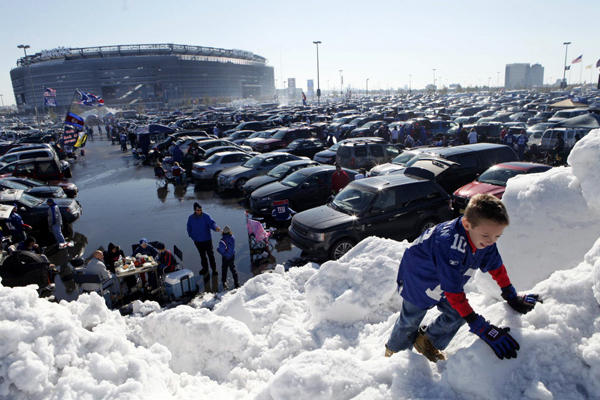
MetLife Stadium in the winter: does this look like ideal Super Bowl weather? It is a vital reminder to avoid “out-thinking the room!”
One of my favorite bits of advice to give to students and to friends alike is, “don’t out-think the room.” Trying to come up with something you think nobody else is going to think up might show that you are more creative, but it could lead to an overall worse idea or product in the end. Moreover, this bit of advice can apply to more basic scenarios, too. If you go to a restaurant and you are not sure what you want to eat, it is usually wise to order up what the place is known for, not to order up some obscure menu item that is rarely served. If the place is known for crab cakes, get the crab cakes. If it is known for its pizza, get the pizza. Don’t out-think the room.
The NFL was in danger of doing that his past Super Bowl when the 45th “Big Game” was awarded to — Indianapolis? Traditionally, the Super Bowl is hosted in a warm-weather city that is built to handle big crowds. Every time the Super Bowl is hosted in Miami, New Orleans, Phoenix or San Diego, things always turn out well. Jacksonville may have relatively warm weather, but it’s not built to handle the big crowds that come in for the big game. Late January in Indianapolis is hardly the ideal spot, either. As it was, the city and the fans were very lucky in that the weather for the game was unseasonably mild. The NFL dodged the bullet in trying to out-think the room, and should have learned their lesson. Alas, they did not. They awarded the hosting of the 2014 Super Bowl to…MetLife Stadium, as in, New Jersey, as in, across the Hudson River from New York City, as in, upper Twenties at nighttime in late January or early February. Brrr! The Super Bowl was never meant to be played in freezing weather, and yet the NFL foolishly overlooked this basic rule in awarding the hosting of the Big Game to the Meadowlands. The Super Bowl always works in Miami, New Orleans, Phoenix, and San Diego, NFL: do not out-think the room!
The reason I say all this is because, in light of the disappointing outcome for the Republican Party in the recent election (namely, we’ll have to put up with four more years of the incompetent B. Hussein Obama), many luminaries in the party have been calling for this change or that change to quickly occur so that the GOP does not gradually shrink to permanent minor party status. Given what is at stake for the country, some of these ideas have been offered with considerable urgency, hence with start warnings about the future. Some, such as veteran Republican strategist and Romney campaign adviser Ron Kaufman offered his thought at the Republican Governors Association Meeting in Las Vegas:
“We need to make sure that we’re not perceived as intolerant,” he said. “The bottom line is we were perceived to be intolerant on some issues. And tone-deaf on others.” This is fine advice when it comes to philosophically complex and deeply emotional issues such as abortion. But what about others that are less complex, more straightforward, and more salient, such as fiscal issues?
“Republicans have to start understanding that small business and entrepreneurs are important, but the people who work for them are also important,” said Rep. Charles Bass, R-N.H., who lost his seat to Democrat Ann Kuster. “We’ve got to be compassionate conservatives.”
The first part of Bass’ idea sounds fine: connect with the average Joe. But the second part raises a few eyebrows. Did we already not try this “compassionate conservatism” before? Under George W. Bush, government spending went up, and that overall action trashed the GOP’s reputation as the grown-ups in the room when it came to fiscal prudence, a reputation the GOP faithful have been laboring ever-so diligently to repair over the past four years.
And of course, there were the calls one has been hearing so often these past ten days of appealing to more minority voters, namely Hispanics. As I have mentioned before, this is an important issue, and one that must be delved into seriously and with the right ideas in place so that we can broaden our electoral base.
The point in all of this is, many of these issues can be solved in a single, large action by nominating a candidate whom more people believe in from the get-go. It sounds simplified, sure, but it worked for Obama. Byron York makes the compelling case that whatever facets of the overall problem party members are bringing up these days, many of them can be effectively addressed all at once with the right candidate in place, somebody whom people want to get around and support.
That is not to say that Gov. Romney was without his die-hard supporters. The business-oriented among us, yours truly included, recognized that he has just the skill set that we need for a leader in these troubled times. But sadly, the vast majority of the electorate has no concept of executive skill sets in leaders, hence it was a non-issue to them. Mitt appealed to his supporters minds in a very big way, but not enough to the overall electorate’s hearts.
The point in all of this is, many party members and operatives seem to try to position themselves as the smartest person in the room in trying to come up with one unique solution to a particular facet of the overall electoral problem the party faced in the past election. But if one focuses on a few small things among many and fail with their ideas on those fronts, then where will we be? What York reminds us is that, overall, the solution is much simpler, and much more straightforward. Find someone who can effectively connect with large swaths of the electorate early on (someone who can win hearts and minds), and much of the problem is solved. We have less than four years to find that person.
The Opinion Index, 11-15-12 November 16, 2012
Posted by intellectualgridiron in Politics.Tags: 10th Amendment, blacks, clarity, Democrats, Dennis Prager, DREAM Act, economy, election, free enterprise, GOP, government, individual, initiative, Jeff Jacoby, Justin Owen, liberty, Massachusetts, Medicaid, minorities, Mitt Romney, Mona Charen, reform, Republicans, Rick Perry, self-reliance, Several States, single, values, Washington, women
add a comment
The issue of Republicans trying to broaden their base is one that has obviously been on my minds within the ranks of the GOP, specifically, how do we bring in more minorities into our camp? Many people who just happen to be minorities no doubt share most of our values, but others, namely a large swath of blacks, seem not to. Many in the black community have kept themselves on Uncle Sam’s Plantation, much to their own peril economically, socially and spiritually. What must be done, according to Dennis Prager, is to bring more minorities towards our values, meaning that we must get the message to them, make it clear to them, and prove to them that our values are in their best interest, and indeed, in America’s best interest.
At the core of things is a particular challenge. We as Republicans stand for hard work, self-reliance, free enterprise and individual initiative. On paper, that seems like an easy sell. But it becomes a much tougher sell when the other side says “don’t worry, we’ll take care of you,” without regard for who will pay for all the goodies. This is part of the case that Mona Charen tries to make, along with the chilling reminder that the worse an economy gets, the more lots of people (single women, etc.) cling to government for security. To overcome this huge obstacle to preserving individual liberty and prosperity, we need to have more brains (and common sense!) and imagination than the Democrats.
One important thing to keep in mind is that some Republicans happen to win in places where they are least expected to, such as the People’s Republic of Massachusetts. How do they do it? Jeff Jacoby points out that they won with focusing on grassroots, and champion liberty, limited government, and low taxes. This, of course, flies in the face of conventional wisdom from campaign consultants, who think that GOP candidates must go wishy-washy and moderate positions. The message is clear: clarity, conviction, and the ability to put it in words people can understand wins, even in Massachusetts.
Meanwhile, lots of people within conservative ranks seem to be piling on Romney right now (hasn’t the poor guy taken enough grief?). Did he make mistakes? Of course he did. Taking Rick Perry to task over his stance on the DREAM Act was a fatal blow towards his hopes for attracting Hispanic votes, for example. But having said all that, it is more than worth pointing out what he did RIGHT. Who better than Hugh Hewitt to offer a nice, easily digestible list of things Mitt did well which future candidates would be well-served to emulate, and others which have set the GOP up for long-term success?
Finally, one important thing to note is an alternative solution to solving the mess in Washington. Instead of trying to change Washington — which we ought not to give up anytime soon — let us also devote just as much energy towards helping the Several States wrestle issues back into their sphere of control. Justin Owen offers a very timely piece on how some states have already challenged the Federal government in key areas such as environmental protection, Medicaid reform, and education. Let us never forget that we have something called the 10th Amendment.
The powers not delegated to the United States by the Constitution, nor prohibited by it to the States, are reserved to the States respectively, or to the people.
This must be remembered above all else, especially now.
The Opinion Index, 11-12-12 November 12, 2012
Posted by intellectualgridiron in Politics.Tags: Adam Corrolla, anchor, Barack Obama, Charles Krauthammer, conservative, culture, Democrat, demographics, Derek Hunter, DREAM Act, election, exit poll, GOP, Hispanic, Hugh Hewitt, immigration, John Boehner, Latino, liberal, Marco Rubio, Michael Barone, Republican, social democracy, Ted Cruz
add a comment
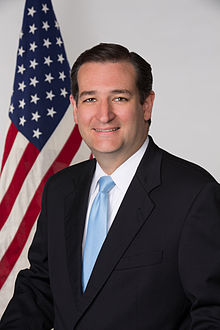
Ted Cruz, the junior senator-elect from the Great State of Texas: of Latino ancestry, he is a new, rising star in the Republican Party.
As conservatives are trying to sort through the wreckage (moderate though it was) of Tuesday’s election, certain recriminations are bound to be exchanged within Party and ideological ranks. Credit Charles Krauthammer for being the coolest head in the room. He offers simple, straightforward solutions to the problems that the GOP faces – the problems that were made abundantly clear thanks to the hindsight of the election and of exit polling.
Was this election an overall rejection of conservatism and a full-throated endorsement of European-style social democracy? Hardly. Krauthammer reminds us that the demographic issue of Hispanics supporting Obama can be solved by taking the forefront on immigration policy reform. He also reminds us that the GOP becoming a more moderate party is not the answer, but just becoming more effective in advancing good arguments. This is no time to lose our philosophical anchor, according to the esteemed psychiatrist. He hit the nail on the head by pointing out what some people have tried to say and need to keep saying over and over again:
“In a world where European social democracy is imploding before our eyes, the party of smaller, more modernized government owns the ideological future.”
If we succeed in persuading more Hispanics to come to our side – not an insurmountable task – then we can win more elections and thus succeed in implementing smaller, more modernized government.
But how does one expand the demographic base? Derek Hunter points out how we can bring in more Hispanics and other people, and does so from a different angle. Yes, leading the clarion call for meaningful, simple immigration reform will surely help. But Hunter reminds something I found to be somewhat reassuring. Hispanics voting for Obama was not so much that demographic rejecting conservatism as it was a reflection on insufficient efforts to offer conservatism to them. This naturally must change as we move, ahem, forward.
If that is not enough, Hunter also points out that ceding the culture to the left will doom conservatism as well. He points out a few successful examples where small archipelagos of conservatism thrive in a vase ocean of liberalism (Adam Carolla being a good example), and how they succeed. If conservatism is to succeed, we must emulate these models, and scale them into continents.
Speaking of the recent election, it was really a triumph of negative campaigning in key target states on the part of Obama’s team, according to Michael Barone. Combine that with a diminished margin of victory in the popular vote compared to Obama’s numbers in 2008, and he hardly has a mandate to make government even more intrusive in our lives as we move forward. Oddly enough, though, Barone hints that House Speaker John Boehner might have a slight mandate of his own.
Another thought: Texas just elected a new junior senator in Ted Cruz. He and Marco Rubio could effectively team up to lead the GOP in being proactive in immigration reform (a modified DREAM Act, perhaps?). But even more importantly, Cruz’ election, one could make the case, could portend of positive things to come. Hugh Hewitt points out that Senator-elect Cruz is, oddly and ironically enough, in the same position that Barack Obama was in 2004. Both Cruz and Obama are/were rising stars in their respective parties in 2012 and 2004, respectively. Both hail from states key to their respective parties. Both were elected to Congress the same year that their parties lost an agonizingly close election. What’s more, in both 2004 and 2012, a candidate from Massachusetts headed a losing presidential ticket. If that’s not enough, both men’s fathers were not born in America. Oh, and Cruz is said to be both a brilliant lawyer and orator. Hmmm….
 intellectualgridiron