Voyager 1 at 35; still making discoveries! December 31, 2012
Posted by intellectualgridiron in Science.Tags: 1, 2, Cassini, Ed Stone, exploration, explore, Gallilean, half-life, Heliosphere, interstellar, Io, Jet Propulsion Laborator, JPL, Jupiter, Kuiper Belt, moon, NASA, Neptune, New Horizons, Pluto, satellite, Saturn, solar, space, system, Voyager, Weekly Reader
add a comment
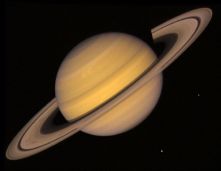
Although this photo was taken by the Voyager 1 probe over 30 years ago, it still remains one of the most iconic images of Saturn in the minds of many people on Earth today.
As the year 2012 comes to a close, it is worth remembering that out in the distant cosmos, the Voyager probes continue to speed along, blazing new trails in so doing. It has been 35 years and counting since they were launched to photograph and analyze the gas giant planets in our solar system in unprecedented detail. Once those primary objectives were completed, the next stage was to explore the outer reaches of our solar system, and then leave it completely to star systems beyond.
All the while, they have left us some indelible images. Voyager 1 first flew by Jupiter in 1979, not only taking better pictures of our system’s largest planet than ever before, but making key discoveries along the way. Not only did it find some new satellites, but its discovery of volcanic activity on the Gallilean moon Io was a find that led us to totally rethink the possibilities of different kinds of geological activity throughout our neighboring planets.
When Voyager 1 flew by Saturn a little over a year later, it gave us many new, detailed photos of Saturn, one of which still remains one of the most iconic images of that distant, large, ringed planets, despite Cassini’s more detailed photos that started to reach us about eight years ago.
So while Voyager 1’s primary mission was completed over three decades ago, it was just warming up compared to its second major set of objectives. Three and and half decades onward, some scientists at NASA’s Jet Propulsion Laboratory in Pasadena, Calif., continue to monitor the probe’s progress, and recently, it has started to make headlines in the scientific community yet again.
Oh, it has a list of decent achievements since 1981, to be sure, yet its recent discovery has really made headlines! Back when I was in the fourth grade, I remember seeing in my Weekly Reader how scientists hoped that the Voyager probes (specifically Voyager 2, but the same goes for ol’ No. 1) would reach the end of the solar system by 2015. At that point, I was thinking “2015? Pluto’s not that much further beyond Neptune, is it?”* Well, it turns out there is a lot in our Heliosphere beyond the planets that we know of. Speaking of which, how many of us knew what the Kuiper Belt was before the Voyager probes boldly went through where no man-made probe had gone before?
Now, Voyager 1 has boldly gone further still. Earlier this month, the scientific community was abuzz about the probe getting its first-ever taste of interstellar space (and ours, too, albeit vicariously!). Ed Stone, a project scientist who continues to monitor Voyager 1 at JPL, has pointed out that while getting closer and closer to actual interstellar space, the probe has discovered something totally new: a “magnetic superhighway!” Yes, this is what the scientists are currently describing this outer edge of the Heliosphere (basically, the part of space that the Sun has any influence over regarding gravitational pull, magnetic/radiation direction, etc.).
One naturally is inclined to ask, how has the probe lasted so long? Would it not have gone dead long ago? Would its, er, battery not have died out? Well, Ed Stone points out that the nuclear fuel used to power the craft has an 88-year half-life. That would be plenty of time to leave the Heliosphere and relay data of what it is like to truly be in interstellar space.
So, as its mission surpasses 35 years and counting, Voyager 1 continues to boldly go to send us data on its new discoveries and exploratory firsts. Any of us interested in studying space shall wait in the coming months and couple of years to see what other firsts the probe will achieve. Happy New Year!
Oh, and just think; in 2015, the New Horizons probe is expected to reach Pluto, and give us unprecedented photos and info from that part of the Solar System!
*The occasion of the Voyager 2 probe being given the main story in my Weekly Reader during my fourth grade year in the early Fall of 1989 was that it just passed up the planet Neptune; a new exploratory achievement for any man-made probe!
Asteroid headed for Earth….sort of. November 7, 2011
Posted by intellectualgridiron in Science.Tags: asteroid, Earth, impact, Jay Melosh, moon, Purdue, science, scientist, YU55
add a comment
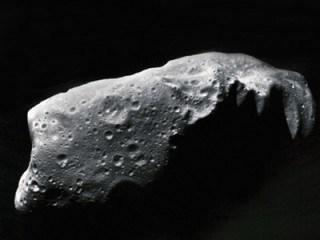 No doubt everyone can breathe a sigh of relief after reading those last two words of the headline. But it is true, sort of. An asteroid that is a quarter of a mile long — bigger than even America’s largest aircraft carrier, is headed towards the near-vicinity of Earth. Officially named YU55, its current trajectory has it flying by the third rock from the Sun on Nov. 8 at a distance of only 202,ooo miles — closer than the Moon (at only 240,000 miles away).
Scientists have been studying this asteroid long enough to be as certain as humanly possible that it will not hit Earth. If it did — Heaven forbid — though, the result would be a possible oceanic impact, with 70-foot tsunami waves 60 miles away, and causing a 7.0 earthquake that that part of the world. So says asteroid impact expert Jay Melosh of Purdue University, my alma mater.
This scenario pales in comparison to the fictional scenario from Armageddon, where that fictional asteroid was the size of Texas, and should it have crashed into the Pacific Ocean, would have caused a tidal wave to wash up to Denver, and enough dust to cloud out the Sun for an epoch. But as Melosh points out, impacts of the relative proportion of the very real YU55 happen about every 100,000 years. The comforting, silver lining in that otherwise rather disturbing thought is that such impacts are survivable, provided that you’re not within, say, 75 to 100 miles of said impact.
In the meantime, though, this close encounter with the asteroid kind gives scientists and lay astronomers alike the golden opportunity to see a huge chunk of extraterrestrial rock up close and personally. Sites for astronomy enthusiasts have been mapping where in the sky YU55 is expected to pass through. But more importantly, a prevailing theory regarding how the Earth took form involves asteroids, specifically that they were responsible for depositing water and minerals on the planet as it was cooling some two or three billion years ago. YU55’s close, though fleeting, proximity will give professional researchers the opportunity to collect telemetric data that will allow for scientists to test this theory. It also lets astronomers take a close look at the class “C” of asteroids, which are very common but not very well understood. No doubt the upcoming astronomical event could help us rectify that problem.
Hubble discovers new Pluto Satellite July 21, 2011
Posted by intellectualgridiron in Science.Tags: astronomy, discovery, dwarf planet Pluto, facilitation, Hubble, hubble telescope, kuiper belt object, moon, satellite, solar system, space, space buffs
add a comment
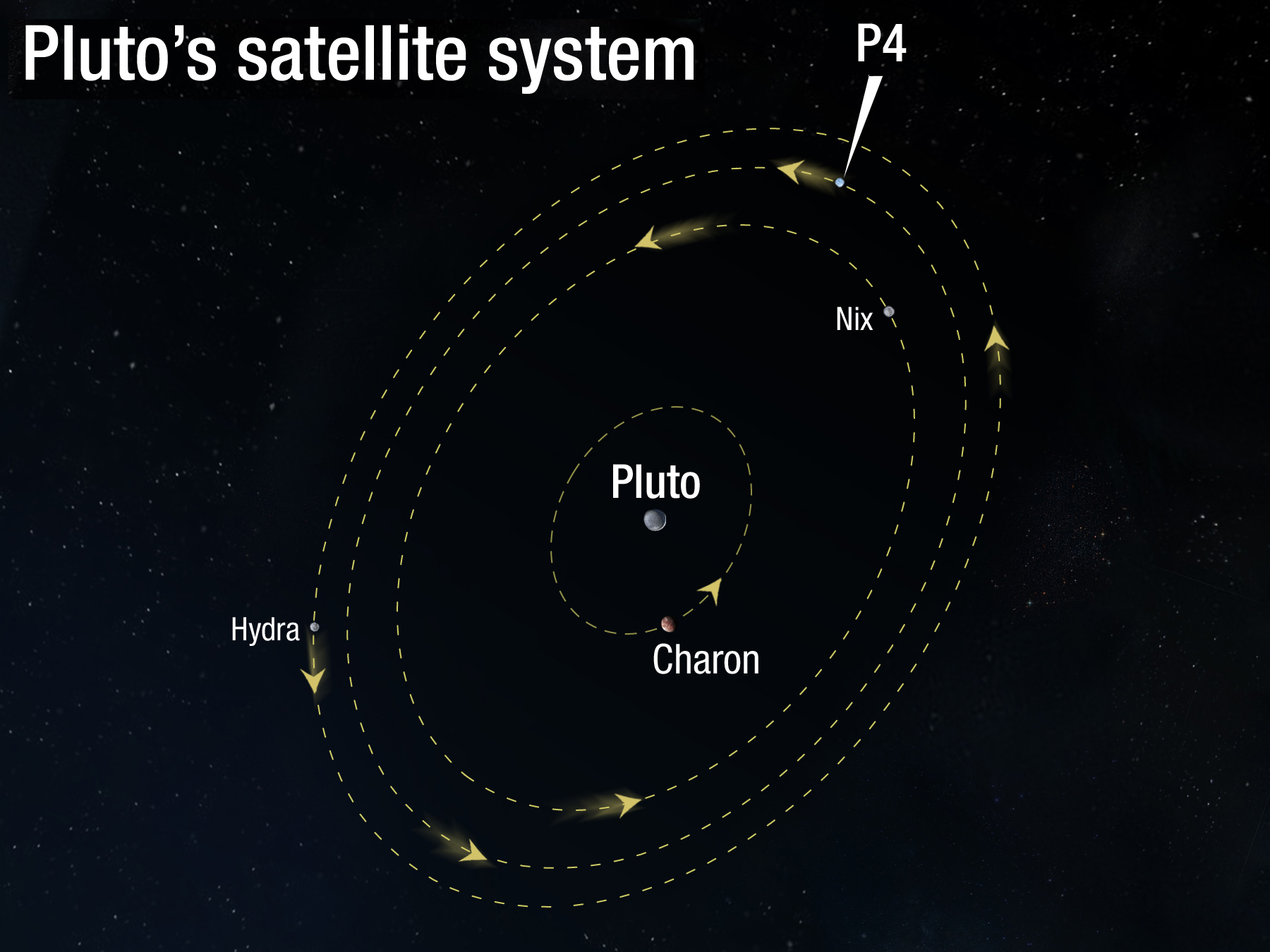
The venerable Hubble telescope is the gift that keeps on giving. Its latest gift to researchers and amateur space buffs alike is the facilitation of the discovery of yet another moon around the enigmatic dwarf planet Pluto. Despite the scientific community having downgraded Pluto’s status from full-fledged planet in the solar system to a lesser category (varying from “dwarf planet” to “Trans-Neptunian Object” to “Plutoid” to “Kuiper Belt Object” to “Plutino”) several years ago, astronomers continue to utilize the Hubble and other telescopes to find that the Plutonian sub-system is bigger than initally thought. The latest-discovered Plutino, thanks to the capabilities of the Hubble craft, is unofficially dubbed “P-4.” Not bad for a “dwarf planet” only about 1440 miles in diameter.
 intellectualgridiron