On the Errors in Jeff Daniels’ Newsroom Rant September 16, 2016
Posted by intellectualgridiron in Politics.Tags: Bill of Rights, Cold War, Evil Empire, Facebook, freedom, Freedomhouse, James Madison, Jeff Daniels, John Adams, liberty, Newsroom, rant, Second World War, Soviet Union, Will McAvoy
add a comment
There is a video clip that continues to surface on Facebook periodically. Each time this clip surfaces, it continues to draw fresh accolades from many a user. Of course, I am talking about this oft-shared clip below:
Many users seem to gush over how the character played by Jeff Daniels “nails it,” to use the modern vernacular. The message of Daniel’s character is blunt: “America is not the greatest country in the world anymore.” It is an impassioned rant on a stage, and perhaps the best explanation for its wide appeal is that it makes an overall emotional, yet ostensibly learned attempt to explain what ails America today. In so doing, however, the character actually ends up libeling America, as the message behind his rant takes much for granted, and in the end, is destitute of foundation.
To ensure intellectual honesty, the character, Will McAvoy, demonstrates an important decree of rectitude early in his answer to a question from an audience member. He prudently observes that James Madison was a genius, that the U.S. Constitution is a masterpiece, and even goes so far to say that the Declaration of Independence is, in his words, “the single greatest piece of American writing.” Agree or disagree with the last clause, one strongly can agree with the impetus behind the observation.
Where McAvoy quickly errs, however, is the litany that follows after what he stated correctly. The reason this litany is baseless, on the whole, is that this attempted chastisement of an audience member is replete with half-truths, carelessly listed without the slightest bit of context. To wit:
“Canada has freedom. Japan has freedom. The UK, Italy, France, Germany, Spain, Australia, Belgium….207 sovereign states in the world, and 180 of them have freedom.”
Truly? One-hundred eighty countries out of 207 sovereign nation-states is a percentage of nearly eighy-seven. Google indicates that there are 196 countries in toto, and of those, not even half of them on a map have been color-coded “free” by Freedomhouse.org.
Moreover, just viewing the small list of countries that McAvoy cites, (Japan, UK, Italy, France, Germany, Belgium) are “free” due to the fact that it was America that either freed them from fascist totalitarianism, or made sure (in the case of Great Britain) that they remained unmolested by it during the Second World War. Moreover, America protected all these countries from the Soviet Union’s imperialist advances during the Cold War. Only the greatest nation in the world could claim such feats.
Pursuant to the same point, the Bill of Rights, a crucial document that puts checks on government’s never-ending appetite for power and control, is absent in Europe.
“There is absolutely no evidence to support…that we’re the greatest country in the world.” Obviously, he overlooked the fact that the free world has expanded greatly since the Second World War on account of America’s efforts. He also overlooked how it was America’s efforts that ultimately brought down the Evil Empire that was the Soviet Union. But when one is consumed by emotion, why allow for this inconvenient truth to interfere with one’s self-indulgent litany?
“We’re seventh in literacy,” he continues, “twenty-seventh in math, twenty-second in science, forty-ninth in life expectancy, 178th in infant mortality, third in median household income, number four in labor force, fourth in exports.”
These statistics seem so randomly drawn as to give the discerning observer the sense that they were fabricated. Indeed, basic research validates this scrutiny. Are we truly 49th in the world in our life expectancy? In reality, it is 31st. Still not great, but it obviously shows the error and lack of truth in his rant.
So what might account for a life expectancy of only 79.3 years, compared to Japan’s, the leader at 83.7 years? Leftists relish using this misleading statistic as an accusation against our supposedly defective healthcare system. What is conveniently ignored in this instance is that America is the most diverse country on earth compared to Japan, which is very homogeneous. Leftists usually worship diversity as one of their many false gods, but conveniently overlook that one of the side-effects of “diversity” is diversity of behaviors. Some behaviors lead to long, healthy lives, while others will cut life short. Such diversity of behaviors account of having, on average, 4.4 fewer years of expect life compared to Japan. To express it differently, the greatest doctors in the world cannot do anything about the rampant murder rates in many inner cities, which naturally bring down the national lifespan average. But in things doctors can control, such as cancer survival rates, we do indeed lead the world.
Concerning being “third in per capita income,” the same thing regarding diversity applies. Not everybody has equal ability to be equally productive. Not everybody is equally ambitious. More to the point, there will always be those who worked harder than most other people. With such a wide range of those proclivities within our population (all 319,000,000 of us), is there no surprise what our per capita GDP is slightly lower than that of small, homogeneous Luxembourg?
How about all the high taxes in Japan and much of Europe that discourage entrepreneurship and increased productivity compared to America? Did Jeff Daniels’ script writers factor that key element into the equation regarding the supposed “freedom” in the countries he casually listed?
Already having demonstrated to be cavalier with the facts, McAvoy nevertheless continues:
“We only lead the world in three categories: number of incarcerated citizens per capita; number of adults who believe angels are real, and defense spending, where we spend more than the next 26 countries combined, 25 of whom are allies.” Well.
Concerning the first point, it is a commentary on two things. First, too many laws. He may have a point, but he fails to mention it, and it surely deserves further, in-depth discussion as to the systemic legal reform we desperately need (John Stossel once offered a novel idea of clearing out antiquated laws and placing sunset provisions on all laws retained and added). But the other thing regarding incarceration rate conveniently overlooks the fact that many of the perpetrators are those who have bad, warped values, who must be removed from civil society so civil society remains safe from the evils they would otherwise perpetrate.
Concerning McAvoy sniffing about adults believing in angels, it betrays his fundamental misunderstanding of what has made America great in the first place. A strong religious grounding (specifically of the Judeo-Christian varieties) is essential to the well-functioning of America. Our Founding Fathers knew this when they first practiced statecraft. Indeed, John Adams concisely underscored this necessity when he observed “[O]ur Constitution was made only for a moral and religious people. It is wholly inadequate to the government of any other.” Angels are thoroughly understood and valued within Judeo-Christian theology, and McAvoys casual, callous dismissal of such belief betrays his true ignorance of a necessary pillar to America’s fundamental greatness.
Concerning the third point regarding defense spending, and why ours is so huge compared to “the next 26 countries,” that is because almost all of those “26 countries” rely on America to not only protect itself from evil regimes and rogue terror groups, but they also rely on America to come to their own defense in their own possible time of need. Many countries in western Europe have allowed for their militaries to atrophy because since the end of the Second World War, they counted on America for their own defense from the Soviets during the Cold War, and from terrorists today.
The error that leftists always make is equating “greatest” with “perfect”. No reasonable person would make such an equivalency. Moreover, reasonable people would also concede that systemic problems exist that need to be addressed so that we maintain our top spot amongst the other nations overall. Rather than strive for perfection (unattainable, as humans are inherently imperfect), to maintain the greatest, one must simply strive to be better. We have excelled at that since our founding. Let us always keep in mind that our liberties are not granted by our Creator as means unto themselves, but rather as means to strive for improvement itself.
On an even more fundamental level, it has escaped a critical mass of user’s notices on social media, of a fundamental, logical implication within the rant in question. If America is no longer the greatest country in the world anymore, which country has taken its place in the supreme spot of rank of nations? Is it Canada, with only eleven percent of the population of its might neighbor to its south? Is it China, what with its systemic problems of entrenched totalitarian government and continued human right violations, coupled with disturbing demographic trends of age? Is it France or Germany, with its critical masses of unassimilated Moslem immigrants who do not share the values of the generous countries who have let them escape their origins of squalor? If McAvoy/Daniels and his sycophants still cling to this message even after demonstrating it is lacking in reason, they continue to fail to select the country that has supplanted America as the greatest of nations. Perhaps that might be the baseless rant’s greatest failing of all.
***********
As a postscript, the fellow seat next to the Will McAvoy character gave an all too expedient, incomplete, and lame answer. Freedom is all well and good, but as already mentioned, for liberty to mater, it must be leveraged for improvement, wed to proper religious grounding. The lady on his other side gave an answer that inadvertently misled. “Diversity” and “inclusion” are ornaments, not strengths, of a great nation. To relay on those two ornaments as structural elements to uphold a nation is as foolish and dangerous as to build one’s house on a foundation of sand.
College Football Week 2 Awards (2016) September 12, 2016
Posted by intellectualgridiron in Sports.Tags: Akron, Alabama, Arizona State, Arkansas, Auburn, Baylor, Bob Stoops, Brett Bielema, Brian Kelly, BYU, Cincinnati, Clemson, college, Darrell Hazell, Florida, Florida State, football, Gamecocks, Gary Patterson, Iowa State, Kalani Sitake, Kent State, Kentucky, Kyle Whittingham, Louisville, Mark Dantonio, Mark Stoops, Michigan, Michigan State, NCAA, Nebraska, Northwestern, Notre Dame, Ohio State, Oklahoma, Oklahoma State, Ole Miss, Oregon, Penn State, Pittsburgh, Purdue, SEC, South Carolina, Stanford, TCU, Tennessee, Texas A&M, Texas Tech, UCLA, USC, USF, Utah, Virginia Tech, Wildcats, Will Muschamp, Willie Taggert, Wisconsin, Wyoming
add a comment
(Note: All rankings are current AP [week 2] unless otherwise noted.)
COACHES Wish I were him: Kyle Whittingham, Utah
Glad I’m not him: Kalani Sitake, BYU
Lucky guy: Brett Bielema, Arkansas
Poor guy: Gary Patterson, TCU
Desperately seeking a wake-up call: Pat Fitzgerald, Northwestern
Desperately seeking a P.R. man: Willie Taggert, South Florida
Desperately seeking sunglasses and a fake beard: Mark Stoops, Kentucky
Desperately seeking … anything: Darrell Hazell, Purdue
TEAMS Thought you’d kick butt, you did: No. 3 Florida State (defeated Charleston Southern 52-8)
Thought you’d kick butt, you didn’t: No. 2 Clemson (defeated Troy 30-24)
Thought you’d get your butt kicked, you did: Akron (lost to No. 10 Wisconsin 54-10)
Thought you’d get your butt kicked, you didn’t: Nicholls (lost to Georgia 26-24)
Thought you wouldn’t kick butt, you did: Nebraska (defeated Wyoming 52-17)
Dang, they’re good: Michigan
Dang, they’re bad: Kentucky
Can’t Stand Prosperity: Oklahoma State
Did the season start? Northwestern
Can the season end? Miami, OH
Can the season never end? Wisconsin
GAMES
Play this again: Arkansas 41, No. 15 TCU 38
Play this again, too: Utah 20, BYU 19
Honorable Mention to play again: South Carolina 13, Vanderbilt 10
Never play this again: No. 20 Texas A&M 67, Prairie View A&M 0
What? East Carolina 33, N.C. State 30
Huh? Arkansas 41, No. 15 TCU 38
Are you kidding me? Illinois State 9, Northwestern 7
Oh – my – God: Central Michigan 30, No. 22 Oklahoma State 27
Told you so: Arizona State 68, Texas Tech 55
NEXT WEEK
(rankings are current AP (post-week 2, pre-week 3)
Ticket to die for: No. 2 Florida State @ No. 10 Louisville
Also: No. 3 Ohio State @ No. 14 Oklahoma
Best non-Power Five vs. Power Five matchup: UCLA @ BYU
Best non-Power Five matchup: No. 6 Houston @ Cincinnati (Thurs.)
Upset alert: Auburn @ No. 17 Texas A&M
Must win: Iowa State @ TCU
Offensive explosion: No. 22 Oregon @ Nebraska
Defensive struggle: No. 1 Alabama @ No. 19 Ole Miss
Great game no one is talking about: Pitt @ Oklahoma State
Intriguing coaching matchup: Mark Dantonio of Michigan State vs. Brian Kelly of Notre Dame
Who’s bringing the body bags? South Carolina State @ No. 3 Clemson
Why are they playing? Ohio U @ No. 15 Tennessee
Plenty of good seats remaining: Monmouth @ Kent State
They shoot horses, don’t they? Georgia State @ No. 9 Wisconsin
Week 2 Take-aways:
After such a spectacular opening week in college football the previous Saturday and surrounding days, this weekend was a considerable let-down. The noon timeslots were mediocre, save for the decent matchup of Penn State vs. Pitt. The 3:30 timeslots were positively atrocious, where the best game was arguably Kentucky vs. Florida, and that game turned out to be a 45-7 blowout in favor of the Gators. All the good games were crammed together in the evening, where I found myself wearing out my TV’s remote by switching around to the games of Arkansas @ TCU, Tennessee vs. Virginia Tech (at the Bristol, Tenn. Motor Speedway), BYU @ Utah, and occasionally South Carolina @ Mississippi State.
After this mediocre lineup of games for this week, one thing that has festered for a while has become even more clear. Two teams that continue to suck with overpaid coaches who are out of their depth are both Darrell Hazell of Purdue and Mark Stoops of Kentucky. The latter is another case, apparently, of where the only Stoops brother who has the skill set to be a legit head coach at the big boy level is Bob, not brother Mark. We might recall that the other brother, Mike, flamed out at Arizona. Concerning brother Mark, who apparently has had all these great recruiting classes while at UK, lost to lowly Southern Miss last week and this week was demolished by a recovering Florida, 45-7. His predecessor, Joker Philips, went 13-24 (4-20 SEC) after three seasons. Stoops is currently 12-26 (4-21 SEC) after the second game in his fourth season of tenure at UK. The Kentucky faithful would do well to ask themselves: is this progress?
The former had only one good year at a middling MAC program (Kent State), and the powers that be at Purdue were suckered in by this limited success to offer him the Purdue job, paying him $2.2 Million annually, or about $1 Million more than his predecessor, Coach Danny Hope. Hazell is thus far 7-30 since the 2013 season at Purdue, while Coach Hope went 22-27 in four seasons there. Doing that math, that amounts to paying an addition $4 Million for 15 fewer wins. For an athletics department that ostensibly prides itself on operating in the black, those numbers simply do not add up. Moreover, it makes one wonder how much better Hope would have performed had he been given those extra resources that Hazell currently enjoys (meager as they still are compared to true big boy programs).
Meanwhile, on a totally unrelated note, Mississippi State gave the impression that they have righted the ship after their embarrassing upset at home last week to South Alabama. They defeated South Carolina this week, 27-14. Conversely, the loss on the part of the Gamecocks’ gives those who doubt the wisdom of the hire of head coach Will Muschamp further credibility.
All this aside, there are some outstanding matchups awaiting us this upcoming weekend, namely:
Michigan State @ Notre Dame; Texas A&M @ Auburn; Pittsburgh @ Oklahoma State; Oregon @ Nebraska; Alabama @ Ole Miss; UCLA @ BYU; Houston @ Cincinnati (Thurs. evening); USC @ Stanford; Ohio State @ Oklahoma; and of course, Florida State @ Louisville, which could potentially be the best game of the year thus far. I for one am already chomping at the bit, especially for the latter game!
College Football Week 1 Awards (2016) September 6, 2016
Posted by intellectualgridiron in Sports.Tags: Alabama, ANZ Stadium, Arizona, Arizona State, Arkansas, Army, Auburn, Bob Stoops, Bronco Mendenhall, Butch Jones, BYU, Charlotte, Clemson, college, Colorado, Derek Mason, Florida State, football, Georgia, Hawaii, Houston, Kansas State, Kentucky, Louisville, LSU, Mark Helfrich, Michigan, Mike MacIntyre, Mississippi State, NCAA, North Carolina, Northern Illinois, Notre Dame, Oklahoma, Ole Miss, Olympics, Oregon, Penn State, SEC, South Carolina, South Dakota State, South Florida, Stanford, Sydney, TCU, Tennessee, Texas, Texas A&M, Texas Tech, Tigers, Tom Herman, Troy, Tulane, UCLA, UConn, USC, Vanderbilt, Virginia, Virginia Tech, Wake Forest, Will Muschamp, Wofford
add a comment
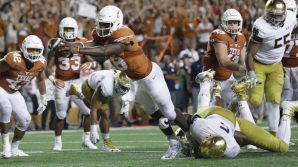
Texas defeated visiting No. 10 Notre Dame in a wild game, 50-47. The game was one of many excellent games to kickoff the 2016 college football season (photo by Getty Images)
(Note: All rankings are current AP [week 1] unless otherwise noted.)
COACHES Wish I were him: Tom Herman, Houston
Glad I’m not him: Bob Stoops, Oklahoma
Lucky guy: Will Muschamp, South Carolina
Poor guy: Derek Mason, Vanderbilt
Desperately seeking a wake-up call: Butch Jones, Tennessee
Desperately seeking a P.R. man: Mike MacIntyre, Colorado
Desperately seeking sunglasses and a fake beard: Les Miles Desperately seeking … anything: Willie Fritz, Tulane
TEAMS
Thought you’d kick butt, you did: No. 19 Louisville (defeated Charlotte 70-14)
Thought you’d kick butt, you didn’t: No. 13 TCU (defeated South Dakota State 38-31)
Thought you’d get your butt kicked, you did: Hawaii (lost to No. 7 Michigan 63-3)
Thought you’d get your butt kicked, you didn’t: Appalachian State (lost to Tennessee 20-13).
Thought you wouldn’t kick butt, you did: Western Kentucky (defeated Rice 46-14)
Dang, they’re good: Alabama
Dang, they’re bad: Tulane
Can’t Stand Prosperity: LSU
Did the season start? Oklahoma (also: Mississippi State)
Can the season end? Hawaii Can the season never end? Louisville
GAMES
Play this again: Wisconsin 16, No. LSU 14
Play this again, too: Texas 50, No. 10 Notre Dame 47
Honorable Mention to play again: South Carolina 13, Vanderbilt 10 Never play this again: No. 7 Michigan 63, Hawaii 3
Say what? Southern Miss 44, Kentucky 35
WHAT? Texas A&M 31, No. 16 UCLA 24
Huh? No. 15 Houston 33, No. 3 Oklahoma 23
Double-huh? Texas 50, No. 10 Notre Dame 47, 2OT
Are you kidding me? South Alabama 21, Mississippi State 20 Oh – my – God: Wisconsin 16, No. 5 LSU 14
NEXT WEEK
(rankings are current AP (post-week 1, pre-week 2) Ticket to die for: Arkansas @ No. 12 TCU
Best non-Power Five vs. Power Five matchup: BYU @ Utah
Best non-Power Five matchup: Northern Illinois @ South Florida
Upset alert: Virginia Tech @ No. 14 Tennessee
Must win: (take your pick)
Offensive explosion: Texas Tech @ Arizona State
Defensive struggle: South Carolina @ Mississippi State
Great game no one is talking about: Penn State @ Pitt
Intriguing coaching matchup: Bronco Mendenhall of Virginia vs. Mark Helfrich of Oregon
Who’s bringing the body bags? Troy @ No. 2 Clemson
Why are they playing? Nicholls State @ No. 9 Georgia
Plenty of good seats remaining: Army @ UConn
They shoot horses, don’t they? Wofford @ No. 18 Ole Miss
Week 1 Take-aways:
What a fantastic opening week for college football. It was billed going in as the greatest opening week in the history of the game, and the games themselves did not disappoint. Two Top Five teams went down to defeat, the most teams where that has happened at the season’s onset since 1972.
On paper alone the matchups were very intriguing. To wit: No. 15 Houston played No. 3 Oklahoma at home – in NRG Stadium, no less. No. 22 North Carolina played No. 18 Georgia in the Georgia Dome in Atlanta (Peach Bowl preview, anyone?). No. 16 UCLA journeyed to Texas A&M to play the Aggies. No. 5 LSU made the trek up to Wisconsin to play the Badgers – in historic Lambeau Field. Indeed, this was the first time his legendary venue hosted a college game. Later in the day, No. 1 Alabama faced off against No. 20 USC in AT&T Stadium in Arlington, Texas. Later still, No. 2 Clemson came to Auburn to throw down with the [War Eagle] Tigers. While those two big game were going on, out west, BYU journeyed down to Glendale, Ariz., to play a neighbor to the south in Arizona.
On Sunday, Notre Dame played the Texas Longhorns, in Austin (nominally ACC vs Big XII), and on Monday, No. 11 Ole Miss played No. 4 Florida State (SEC vs ACC), thus adding two more highly marquee matchups two an incredible, extended opening weekend.
If that’s not enough, the previous week, Hawaii played Cal…in Sydney, Australia. The venue for this game was ANZ Stadium, the new name of the stadium used to host the opening/closing ceremonies and the track and field events for the 2000 Summer Olympics.
Whom do we have to thank for this magnificent opening to the 2016 season of college football? Most likely we have the Playoff Committee to thank. They re-worked the formula for selecting teams. The BCS formula left teams way too cautious. One loss likely meant being out of the hunt for a national title. Better therefore to pad the record with an easy win. We the fans suffered with lousy non-conference matchups as a result. When the switch was made from a BCS selection to a four-team playoff, the formula was modified to the point where one loss would not mean the end of the season for those who were in the national title hunt. Conversely, the new formula put a stronger emphasis on strength of schedule. It was a win-win-win. The first “win” is in the form of teams being more free to schedule good games before the conference portion of their season than during the BCS era. The fans reap the second win with great games (see: this weekend). The third win is, as mentioned before, if you have a tough, strong schedule, one loss will not necessarily dash your season’s aspirations.
Good thing, too, because many commentators have dubbed this Saturday the “Day of the Dog”…the underdog, that is. Texas A&M knocked off No. 16 UCLA in overtime at home. Fifteenth-ranked Houston beat No. 3 Oklahoma by 10 points. Even more stunning was Mississippi State missing a last-minute field goal…at home…to lowly South Alabama. Of course, the unranked Wisconsin Badgers upset the No. 5 LSU Tigers in a close game, 16-14. The following evening, the unranked Longhorns knocked off the 10th-ranked Fighting Irish at home, 50-57, in a second overtime, no less.
Apropos of nothing, here is a philosophical question for you: which is more pathetic; that Tulane could only score seven points on Wake Forest, or that Wake Forest could score only seven points on Tulane?
Regardless, what a stupendous weekend for college football. Fans should treasure it for a long time to come!
On the Future of the Olympic Games July 28, 2016
Posted by intellectualgridiron in Sports.Tags: Athens, Atlanta, Australia, Beijing, Berlin, boondoggle, Brazil, Calgary, Canada, commerce, culture, de Janeiro, developed, France, Germany, Great Britain, Greece, Israel, Japan, London, Los Angeles, Munich, Olympics, Park City, Rio, rule of law, Salt Lake, Seoul, Sochi, Summer Games, superior, Sydney, Third World, Tokyo, United States, Vancouver, waste, Whistler, Winter Games
add a comment

One example of the ruins of the Olympic venues in Athens from the 2004 Summer Games. This is what happens when the hosting of the Olympics are awarded to countries that are not First World/commerce-oriented.
The train wreck in Rio de Janeiro that continues to unfold as the Summer Olympics are but days away has exposed two large, systemic problems. The obvious one is with Brazil itself. Its economy may have been on the rise in 2009 to the point where it gave enough people the impression that it was becoming part of the developed world. Not long afterwards, political corruption, lack of infrastructure, and a glaring lack of sanitation exposed Brazil as still being Third World and still having a long way to go before it deserves to sit at the grownups table of world affairs (along with the United States, Great Britain, Germany, Japan, Canada, Israel, Australia, possibly France, and the like).
The other systemic issue at play is with the Olympic Games themselves. Simply put, they are huge, and very expensive to stage. Even 40 years ago, things almost reached a tipping point. The city of Montreal hosted the 1976 Summer Olympics, only to be $1.5 Billion in debt afterwards. It took that city almost 30 years to pay it off. Indeed, few cities wanted to host the Games after that. Sure, Moscow jumped at the chance four years later, because to a Communist nation, money is no object when it comes to propaganda.
Peter Ueberroth and the Los Angeles organizing committee for 1984 revolutionized how the Games were financed when he persuaded the International Olympic Committee to allow corporate sponsorship. It saved the Games for another 30 years.
Now, the Games have grown even bigger still, to the point where they are too expensive for new cities to host the Games. Sure, Putin and the Russian government seemed more than willing to turn Sochi into a $51 Billion (with a ‘B’) boondoggle, because, again, at what price propaganda?
Beijing was the only viable city that wanted to host the Winter Olympics for 2022. The IOC was certainly were not going to give the Winter Games to Kazakhstan, for goodness sake. It is a sad commentary on the susceptibility of the IOC to a bribe that so few viable countries and cities thereof even put in bids for the 2022 Winter Games in the first place.
That aside, one thing is for certain: the Olympics are so huge and such a big deal that only commerce-oriented (read: First World, developed) countries are built and, indeed, fit to host the Games.
Yet, there is this politically-correct mantra out there, saying that everyone deserves a chance, but grownups will tell you that is pure poppycock. The truth is, most nations and even whole continents are not built to handle and host the Olympics. That includes Africa (with the possible exception of Johannesburg), South America (as we are currently seeing now), the Middle East (outside of Israel), and central and Southeast Asia.
Even some countries in otherwise developed regions are more than suspect. Remember Athens in 2004? The Greeks built all those state-of-the-art facilities only to let them go to ruin a decade later. Yes, it sounded wonderful for the Olympics to be hosted in the ancient birthplace of the Games themselves, but the huge problem was that Greece is anything but commerce-oriented, which speaks to a culturally systemic problem in Greece itself.
One aspect of this systemic issue is that a city that wants to host the Games for the first time has to spend billions of dollars to build new facilities from scratch. In this day and age, even with corporate sponsorship and in some cases, state-supported funding, that is no longer economically viable.
The solution is to start cycling the Games around to cities that meet certain criteria. They are:
1.) Be situated in a commerce-oriented country (i.e., one of the aforementioned “grownup” countries). Not all cultures are equal. Some cultures are superior to others. A hallmark of this cultural supremacy is a culture that itself is commerce-oriented, that respects the rule of law and property rights of the individual, that frowns on black markets, and puts a premium on democratic governments and transparency within. Not to mention, superior cultures minimize corruption in government, at least compared to more corrupt Third World nations. These sorts of countries also have free presses (to varying extents; France is suspect in this regard) that can call wayward politicians into account for any malfeasance.
Commerce-oriented countries also have the necessary infrastructure for such massive undertakings as the Games. This includes transportation (e.g., airports and expressways), not to mention a sufficient amount of clean, comfortable, available hotel rooms to handle the crush of spectators attending said Games.
2.) Be a city big enough that it already has the aforementioned infrastructure in place. This applies to cities that have never hosted a previous Olympics.
3.) This is the big one: ideally, be a city that has already hosted the Games, and has proven to do so exceptionally well.
Indeed, for the Olympics to remain doable in the future, the way to go is to starting cycling them around to cities (and, by extension, their countries) that have proven capable of hosting the Olympics well. The IOC seems to be inching towards this already, however gradually. London just hosted its Olympic Games for the third time, most recently in 2012. Tokyo — another excellent choice on the part of the IOC — will host the 2020 Summer Games. Los Angeles is currently bidding to host the Summer Games for 2024.
For these cities, the venues/facilities are already built. Maybe a little renovation or generally sprucing up might be in place, but such expenditures pale in comparison to building everything from scratch. Los Angeles, for example, has but one additional facility to build (for rowing and kayaking) and it’s all set.
Think about it from the Winter Games perspective. Sure, a nearby, mountainous ski resort town can handle the alpine skiing events (Salt Lake had Park City, Vancouver had Whistler), but you still need to build a sliding sports track. That alone costs between $50-100 Million, and then there is the necessary ski jumping tower, etc., etc. Economically, it makes sense to host the Games in cities have already hosted them, and hosted them well.
One could cycle the Winter Games from Salt Lake City to, say, Munich (they have a sliding sports track at nearby Koenigssee), then Calgary and/or Vancouver. What’s not to love?
Similarly, a Summer Games cycle of Los Angeles, London, Sydney, Atlanta, Tokyo, and Munich/Berlin would work just fine. Seoul would be a viable cycle candidate as well.
Either we start doing this, or we encourage cities to continue to engage in multi-billion-dollar boondoggles to build athletic venues that rarely get used again, like those in Athens (indeed, what shall become of Rio’s many facilities after these upcoming Games are concluded?).
So, which is it going to be? Cycling the Games around to proven cities/countries, or more wasteful boondoggles?
On the Problems with the Rio Olympics July 27, 2016
Posted by intellectualgridiron in Sports.Tags: 1936, 1980, 2008, 2014, 2016, Berlin, Christine Brennan, corruption, Dilma Rousseff, International Olympic Committee, IOC, Moscow, Olympics, Petrobas, Rio, Rio de Janeiro, sewage, Sochi, Summer Games, The Herd, Third World, tropical, violence, Winter Games, Zika
2 comments
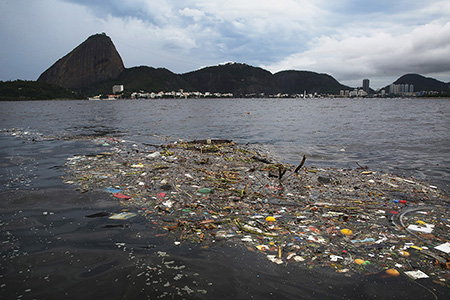
Does this look like a venue fit for Olympic sailing and swimming?
Has the IOC learned its lesson yet (I’ll pause for laughter)? Frankly, I would not hold out hope for this. This is, after all, the same IOC that gave the Olympics to Nazi Germany in 1936 (both Winter and Summer Games). That awarded the 1980 Summer Games to Moscow, the epicenter of the slave society bent on taking over the entire world (I mean Communism, of course). They also awarded the 2008 Summer Olympics to Beijing despite the decades-long, grotesque train of human rights abuses on the part of Red China.
Then there was the disaster that was Sochi in 2014. Leave aside the fact that Vladimir Putin has made every effort to cast himself in the mold of a Soviet Premier.
Focus instead on the grossly inadequate lodging; the issues with the available food; the $51 Billion overall boondoggle of hosting the Games; the subtropical climate (keep in mind these were Winter Olympics); the putrid water supply; the state-sanctioned killing of stray dogs, and, not to mention, the state-sanctioned doping of the Russian athletes (no wonder Russia came out of nowhere to win so many medals after so many mediocre performances in recent Winter Games).
Now the world is turning its attention to the Summer Olympics in Rio de Janeiro in Brazil, and the train wreck it is rapidly becoming. Granted, Rio holds a special mystique for people all over the world: a megacity in beautiful, tropical surroundings, and miles of warm, sexy beaches. Sounds great to host the Olympics there, right? That is, it all sounds great until reality is considered. To wit:
Economically, the Brazil is in its worst recession since the 1930s, partly because of the declining oil prices on the world market. Locally, Rio de Janeiro has declared a financial state of emergency. Falling oil prices alone cannot be totally blamed for this crisis. Indeed, a much larger factor is government corruption, a hallmark of Third World politics. To that point, a major investigation into the state-controlled oil corporation Petrobas has already forced several government officials to step down. That is good, but will their replacements be reform-minded? The cynical side of me says, “don’t hold your breath.” Still, the political corruption scandals leading up to the Games have already had considerable fallout, for even Brazil’s president, Dilma Rousseff, faces impeachment. That may be good for justice, but not good timing for a country to have a political crisis when it is about to host something as mammoth as the Summer Olympic Games.
As a side note, why does an oil company need to be state-controlled in the first place? The free market, coupled with sensible regulation, has proven to be an effective means of governing, say, Chevron and ExxonMobil. But this is what helps make the developed world the developed world.
In any case, health-wise, things are no better. Yes, the tropics are lush and beautiful, with nice, sunny weather and gorgeous palm trees swaying to and fro. The bad news is that all that nice weather helps breed pathogens and vectors thereof that are non-existent in the non-tropical latitudes of the developed world. Yellow fever and malaria are two classic examples, but what has recently made news is the presence of the Zika virus in Brazil. Did the IOC consider this when they awarded the Games to a country that is A) tropical, and B), still mostly Third World?
But that’s not the half of it. Another hallmark of Third World countries is a much greater degree of pollution than in the developed world. Outdoor aquatic venues for sailing and open water swimming are contaminated with trash and (drum roll, please) raw sewage. Let that sink in for a moment or two.
Violence, of course, is another Third World problem (spare me the talk about developed world exceptions like Chicago and other inner cities where bad, warped values in those locales rule the day so as to provide Third World situations in an otherwise developed region). A human foot and other body parts have recently washed up on a beach at Rio. That’s bad enough. Worse is that this particular beach is the same venue slated for beach volleyball events. Speaking of violence, armed robberies on the street are up 24 percent. Some athletes who have already shown up in preparation for the Olympics have sadly experienced this first-hand. In May, an Olympic gold medalist from Spain and two other fellow member of their sailing team were robbed at gunpoint in Rio. More recently, the same thing happened to two Australian paralympians. Oh, and recently, a group of armed men stormed a hospital.
This rise in violence coincides at the same time with city police resources in Rio being strained to the breaking point. They are so cash-poor that they have had to beg for basic office supplies and toilet paper. Because of the lack of resources brought on by Brazil’s economic crisis, the police have had to ground their helicopters and have had to park half of their fleet of cars to save fuel. Not what you want when hundreds of thousands of visitors, athletes and spectators alike, are about to count on police protection in that city. Some policemen in Rio have threatened to shirk their duties on account of their paychecks being delayed as well.
The athletes themselves, many of whom have been gradually filing into the Olympic village in advance of the Games, have also borne the brunt of Rio’s many problems. The village, which consists of 31 17-storey towers, has been plagued with leaky pipes, exposed wires, and blocked toilets. Keep in mind that this is brand-new construction, not some dilapidated public housing tower. Gotta love those Third World construction standards. Already the Australian, Italian, and even Argentinian teams have rented hotels and/or apartments until the contractors can fix these issues.
Anybody with a healthy dose of common sense would quickly point out that when you give something as huge and important as the Olympic Games to a Third World country, even one as borderline and emerging as Brazil, that issues like these are par for the course. So how did the IOC foolishly decide to let Rio de Janeiro host the Summer Games anyhow?
Three possible reasons: One possibility is that the IOC is corrupt itself. How else does one surmise that it gave the Winter Games to Sochi? How else does one explain Russia not being entirely banned from these Olympics despite proven state-sanctioned doping at those Games? Over the past decade, one thing I have learned is to never underestimate the IOC’s susceptibility to bribes. The same thing could have happened in the Rio case.
A second reason is that political correctness clearly played a part in tainting the IOC’s collective judgment. There is this politically correct mentality out there that every major city/major region deserves to host the Games. Giving the Olympics to a South American country for the first time ever helped the IOC solidify their PC bona fides and thus they felt very good about themselves in the process for being so “inclusive”.
Third is that the International Olympic Committee was sold a bill of goods. Brazil’s economy was on the rise in 2009. Some observers at that time naively thought that Brazil’s economy would eventually surpass those of Britain and France. The folks from the Rio organizing committee played on that, as well as the sexiness of the city, along with the beauty of the geographical surroundings. Christine Brennan of USA Today, in an interview with Colin Cowherd on his FS1 radio and TV show The Herd, pointed out that this combination clearly played a factor when the IOC made their decision seven years ago. All that was before Brazil’s Third World hang-ups helped cause its economy to crash and is now behind those of Italy and even India.
Solutions to avoiding issues like these in the future shall be explored in another article shortly come. But for the time being, the economic crisis, the political crisis, the construction and infrastructural issues, the rampant pollution and the rising crime add up to a train wreck-in-the-making for these upcoming Olympic Games. Maybe it will take such a disaster for the aristocratic-wannabes in Lausanne, Switzerland to finally wake up and use better judgment to avoid such disasters in the future.
Choose Wisely Where to Campaign, Sen. Cruz March 10, 2016
Posted by intellectualgridiron in Politics.Tags: Constitution, Donald Trump, Florida, GOP, John Kasich, Marco Rubio, Michael Barone, Ohio, primary, Republican, Ted Cruz
add a comment
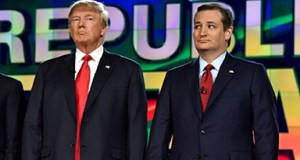 There is an old saying of “choose your hill to die on”. The meaning behind the saying is that nobody has unlimited resources/energy. Therefore, one must pick one’s proverbial battles judiciously if that person has any hope of succeeding in his/her endeavor.
The overall message of the Tuesday, March 8 Republican primaries is that they are anything but settled. As Michael Barone points out, a Donald Trump delegate majority is anything but inevitable. The key to ensuring the prevention of Trump ruining the party is, at this immediate point, to vote tactically, not strategically. Ohio and Florida are both winner-take-all primaries. With four candidates remaining in the race, that means a win on plurality instead of majority is a foregone conclusion.
Both the aforementioned states off lots of delegates. The ideal tactical votes right now is for Ohio GOP voters to give the delegates to Gov. John Kasich. Likewise, the ideal tactical vote in Florida is for Senator Marco Rubio to win. Both of these candidates are the most viable alternatives to Trump in these respective states.
Enter Cruz, who seems to have no concept of these important tactics. He has been going after Rubio in Florida and going after Kasich in Ohio. This is madness. Undermining both of these candidates in these respective states can only help Trump. Extra votes to Cruz in both of these states are unlikely to be detracted from The Donald, but are very likely to hurt the respective viable alternatives to Trump.
Cruz has thus become a very frustrating candidate to follow. His energy is admirable, but he has proven to not have an eye for these important tactics, and that could be potentially hazardous to us all. For if Trump wins the GOP nomination, the party faithful are essentially doomed to a Bataan Death March of a political campaign, slowly and agonizingly dragging into early November. Moreover, those of us who care about the Constitutional limits on governmental scope and power shall be particularly scorned, as neither nominee of the two major parties will, in this scenario, have any respect for America’s founding document.
The irony in all of this is that Cruz bills himself as a Constitutional standard-bearer. Yet his lack of tactical sense in this crucial primary could very well undermine his most cherished selling point by not understanding which states he can credibly win and which states he ought to let other anti-Trump nominees win to make sure The Donald does not gain further strength.
Be wise, Senator Cruz: leave Florida to Rubio and Ohio to Kasich, and by all means, concentrate your energy in the other states still in play. Otherwise, you might ruin things for all us, in some way for a generation to come. Should the unthinkable come to pass, how then will you be of any benefit to those of us who share your ideology? Sharing our values is all well and good, but if you lack the discipline to effectively advance these values, you become a liability and thus an unaware tool for those who are hostile to that which the Constitution stands.
On Morgan Burke and Purdue February 19, 2016
Posted by intellectualgridiron in Sports.Tags: ad, Appalachian State, Arena, athletics, B1G, Big Ten, Brian Kelly, Danny Hope, Darrell Hazell, David Boudia, director, Drew Brees, EKU, Golden Flashes, James Franklin, Jim Harbaugh, Joe Tiller, Kent State, Mackey, Mark Dantonio, Morgan Burke, NCAA, Purdue, Ross-Ade, trustees, Urban Meyer
add a comment
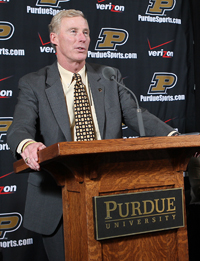 Morgan J. Burke has been the Athletics Director at Purdue University for more than 20 years. On Thursday, Feb. 11, he announced that he would retire from this position, effective June of next year. During his lengthy tenure, he has garnered a reputation amongst his peers as one of the most competent AD’s in major college athletics, especially in terms of finances. With so many AD’s spending money as if their budgets were bottomless pits, Burke has been very fiscally sound, and has enjoyed the deserved reputation as a prudent business manager as a result.
When he took over as the top athletics administrator in 1993, Purdue had the absolute worst athletics program in the Big Ten. Hammer and Rails has an article that puts this in perspective, including that fact that the football program only had five (yes, five) bowl appearances total in its history, and was in year eight of a 12-year bowl game drought. The schools’ baseball, ahem, “stadium” would have been considered poor by high school standards. The swimming and diving teams’ home pool was in some hidden location underground at Lambert Fieldhouse. Ross-Ade Stadium was practically falling apart. In short, the department itself was operating on a shoestring budget with awful facilities and teams badly-performing as a result.
In the span of Burke’s tenure, Ross-Ade received much-needed renovations, including leading the way in building an aircraft carrier-sized press box on the side of one’s football stadium. The football team has enjoyed 12 bowl appearances between 1997 and 2012, including an elusive and prestigious Rose Bowl berth. Mackey Arena has also enjoyed major upgrades, along with being home to a men’s team that has delivered four men’s basketball Big Ten titles and a women’s national championship. For what it’s worth, women’s golf brought home the national title in 2010. A nice, more comprehensive list of all that Burke has done well can be found here.
Moreover, (again, for what it’s worth), women’s soccer, softball, baseball, and tennis all have new facilities. The new swimming and diving pool, opened up ca. 2000, is considered one of the finest college natatoria in the whole country. While not exactly on most people’s radar screens, Purdue has become a diving powerhouse (e.g., David Boudia, 2012 Olympic gold medalist).
And yet, to speak with the Purdue University faithful these days, the firm impression is that the athletics department is in an absolute shambles. Sure, it’s all well and good that the softball, baseball and soccer teams have wonderful facilities, and a fine reflection on the university that the swim teams have a jewel of a pool to call their own. But there are problems afoot with the two highest-profile programs, those being football and men’s basketball.
The latter has been performing very inconsistently as of late, what with promising recruiting classes that fail to live up to their potential. But even worse and more urgent is the absolute disgrace of the football team. Coach Joe Tiller’s teams’ performances started waning during his last few years, especially since the 2005 season. When former assistant coach to Tiller in Danny Hope took over (he had been the head coach at Eastern Kentucky University from 2003 through 2007), things kept declining further (5-7 in 2009, 4-8 in 2010). Coach Hope enjoyed only two bowl appearances after going 7-6 in 2011 and 6-6 in 2012. Ironically, he was fired despite a bowl berth in 2012.
Herein lies a symptom of a systemic problem. Purdue has been NOTORIOUS for not paying its coaches even average market value. Coach Tiller was one of the lowest-paid football coaches in the conference for one, and that did not change when the torch was passed to Coach Hope. In college football, it’s all about the coach and the kind of playing talent that coach is able to recruit. Just see what Brian Kelly has achieved at Notre Dame, in this era’s Sunbelt-dominated era of college football, or how Jim Harbaugh has been turning things around at Michigan to illustrate this crucial point.
Basically, Burke tried to make things work with Coach Hope while giving him a shoestring budget. Coach Hope in turn did what he could with such a dearth of resources, but his performance on the field reflected the fact that he was not getting the type of support he needed to compete effectively in major college football. Firing him became tantamount to killing the messenger.
But there are other dimensions to this problem. Before and during the Coach Hope era, Purdue’s reputation for under-paying its athletic personnel was well-founded and deserved. Even competent, ambitious people who worked on the administrative side of the department would leave for better pay at other schools, even to the intra-conference competition. That especially went for assistant coaches who were worth a thing in the sport; after a few years of building a reputation at Purdue, they would soon leave for greener pastures. As Fox Sports’ Colin Cowherd often reminds us, “[C]oaches do not care about your fight song: PAY them!”
Burke seemed to have gotten that memo when searching for a new football coach in the wake of Coach Hope’s departure. He announced that he was raising additional funds to try to attract a better coaching talent. Eventually, the searched settled on Darrell Hazell, then the head coach at Kent State who had a good year with the Golden Flashes (as an aside, snapping up a MAC coach who has had only one or two good years there into a Power Five Conference team is always a risky roll of the dice). Case in point: while Coach Hope’s base salary was $925,000 a year, Coach Hazell’s base salary was $1,750,000. Better, but still not enough to attract talent on par with, say, James Franklin of Penn State or Mark Dantonio at Michigan State, let alone Urban Meyer or Jim Harbaugh.
Moreover, when the bigger players in the B1G are searching for their new coach, they never seem to have to announce some fundraising effort to be able to offer a big-name, proven winner of a coach a competitive salary. Yet Purdue had to announce such an effort just to be able to pay its coach $1.75 million, which is still sub-average among the Power Five.
Before drilling even deeper to the root problem, let us keep things in perspective for now. Burke has been proven that he is among the best AD’s in the country in terms of two things. One is operations. Having attended the Big Ten wrestling championships, hosted in Mackey Arena on March 3, 2012, I can personally attest that they were carried out flawlessly.
The other is financials. The Big Ten is home to some gigantic athletics departments that include both Michigan and Ohio State, both of whom have a figurative license to print money. Purdue, meanwhile is at a systemic disadvantage in that its athletic department receives ZERO money from the university. Despite that handicap, Burke has led a very financially sound department, with each fiscal year ending in the black.
But Burke’s weakness has been talent acquisition, which, frankly, is 90 percent of his job in the public’s eye. He lucked out with Coach Tiller, who in hindsight had a limited shelf life of effectiveness without Drew Brees. He tried going cheap with Coach Hope after Tiller, and that ended up crippling the program. Although he doubled the head football coach’s salary at Purdue, he has wasted it on Darrell Hazell. Granted, Hazell is a fine man who has raised outstanding kids and has done everything beyond reproach. Moreover, he has done wonderful, marvelous things in reaching out to football alums.
Yet despite being a fine gentleman off the field, Coach Hazell’s on-the-field record has been only 6-30 in three seasons. This dismal performance has led to a damaging effect on Purdue’s athletic and thus academic reputation to average people. It has in turn led to major frustrations on the part of the Purdue alumni and related faithful. Since Burke hired Hazell, a good bulk of this frustration has understandably been laid at the feet of the AD.
Thus, the initial reaction to the announcement of Burke’s eventual retirement: why wait so long when a changing of the guard appears to be in order? Sixteen months seems like a long time to wait to take the program into a new direction. More to the point, is the change desperately in order? Answer: yes and no. A two-decade tenure for an athletics director is long enough. After that lengthy span of time, new blood is needed, with new leadership to take the department in new directions. Given the current, disgraceful abyss of the football program and the inconsistent performance of men’s basketball, that new direction is obviously, desperately needed.
But will a changing of the guard at AD really help beget that? After extensive deliberation and searching of perspectives, I am led to conclude that a new AD alone might not help bring about the change Purdue desperately needs. Perhaps Burke’s ineptitude at hiring a proven, big-name coach was a symptom of his being hamstrung by the Board of Trustees.
Most universities “get it.” That is, they understand that college athletics, and football in particular, are front porches to their universities. Meaning, the trustees of most major universities understand that football is the primary marketing tool, and they thus see the football team as a way of leveraging and building the schools’ entire reputation in the eyes of the general public. Purdue, in contrast, sees athletics as a secondary mission, and has historically chosen to put academics first. While this is noble, it is also short-sighted, given the context of today’s society, where we accept the use of a school’s football team as the primary promotion tool as normal and indeed, expected.
When podunk Appalachian State was vying for three consecutive national titles as the FCS level in football last decade, it was a huge shot in the arm for that school. During a home game in the playoffs in 2007, the university’s president was on the sidelines wearing an ASU football jersey, joyously telling the sideline reporter for ESPN that applications for potential students to attend that university had skyrocketed. Enough said.
Thus we are led to the core problem at hand: why do the members of Purdue’s Board of Trustees fail to grasp this? As long as they fail to understand this basic, modern tenet of university promotion, it might not matter how capable Burke’s replacement at AD will be.
 intellectualgridiron